Tag: paxherbals

  • History Made as Paxherbals Hosted GEN Conference

    History Made as Paxherbals Hosted GEN Conference

    Nigeria recently made history as it hosted the 2017 conference of the Global Ecovillage Network-Africa (GEN-AFRICA), courtesy of Paxherbal Clinic and Research Laboratories at Ewu, in Edo State, Nigeria, from December 10-17.

    The Conference brought together 20 participants from 17 different countries in Africa, Europe and a representative from the United Nations. The conference aimed to foster exchange of ideas among participants on how best to create sustainable development and environment friendly lifestyles in the key dimensions of human engagement:  Ecology, Culture, Economy and the Social, which also includes the Spiritual.

    The Global Ecovillage Network envisions a world of empowered citizens and communities, designing and implementing their own pathways to a sustainable future, and building bridges of hope and international solidarity. As a solution-based, multi-stakeholder alliance, GEN provides information, tools, examples and global representation to the expanding network of those dedicated to developing and demonstrating sustainability principles and practices in their lifestyles and communities around the world.

    At the beginning of the conference, the International President of Global Ecovillage Network (GEN), Kosha Joubert from Scotland, affirms the core vision of GEN, which is to build a world that is regenerating rather than depleting the environment, and where cooperation and connection is rewarded.

    Global Ecovillage Network in Africa, nicknamed GEN-AFRICA, works with communities all over Africa, especially those communities who want to regenerate their natural environments, preserve cultural heritage, increase social resilience, improve livelihoods and become powerful models of change. Through projects such as the Ecovillage Development Programme, GEN-AFRICA assists local residents and community-owned development activities with transformative, regional or nationwide change.

    During the intensive one-week conference, participants discussed about climate change, poverty, food security, organic farming, eco-friendly water solution systems and other innovations. The good news, it was affirmed, is that even though we face many challenges in the world of today, there are solutions and people willing to implement them! The outlook of the conference, the participants affirmed, was not pessimism and gloom, but optimism and joy, an affirmation that human creativity and capacity for innovation are endless.

    The aims and objectives of the Global Ecovillage network also include the following:

    • To advance the education of individuals from all walks of life by sharing the experience and best practices gained from the networks of ecovillages and sustainable communities worldwide.
    • To advance human rights, conflict resolution, and reconciliation by empowering local communities to interact globally, while promoting a culture of mutual acceptance and respect, effective communications, and cross-cultural outreach.
    • To advance environmental protection globally by serving as a think tank, incubator, international partner organization, and catalyst for projects that expedite the shift to sustainable and resilient lifestyles.
    • To advance citizen and community participation in local decision-making, influencing policy-makers, and educating the public, to accelerate the transition to sustainable living.

    Some of the highlights of the conference include a facility tour of Paxherbal Clinic and research Laboratories in Ewu, Edo State, which hosted the conference.  After a tour of paxherbals, Participants expressed their delight and admiration for the high level of innovation, organization and scientific research taking place at the Centre, and they encouraged the management of Paxherbal not to relent in their efforts to bring health closer to the people.

    The second highlight was the visit to Ewu village in Esan central local government of Edo state. Ewu Kingdom is made up of seven villages, with a population comprising Christian, Muslim and traditional religion practitioners in a balanced proportion. Participants did not fail to notice one unique attribute of Ewu: how the communities live together in peace despite differences in religion. The meeting with the local community took place in front of the palace of the king of Ewu. During their interactions with the visitors, the local community expressed their gratitude to Paxherbal and OFIRDI for their community development initiatives which has made visible impact in the community. Such initiatives include the community loan scheme , and the library project .  During the interaction with the local community, it emerged that water remains a major challenge to all the communities in Ewu kingdom. The next steps will involve providing solutions which will be community- led and sustainable.
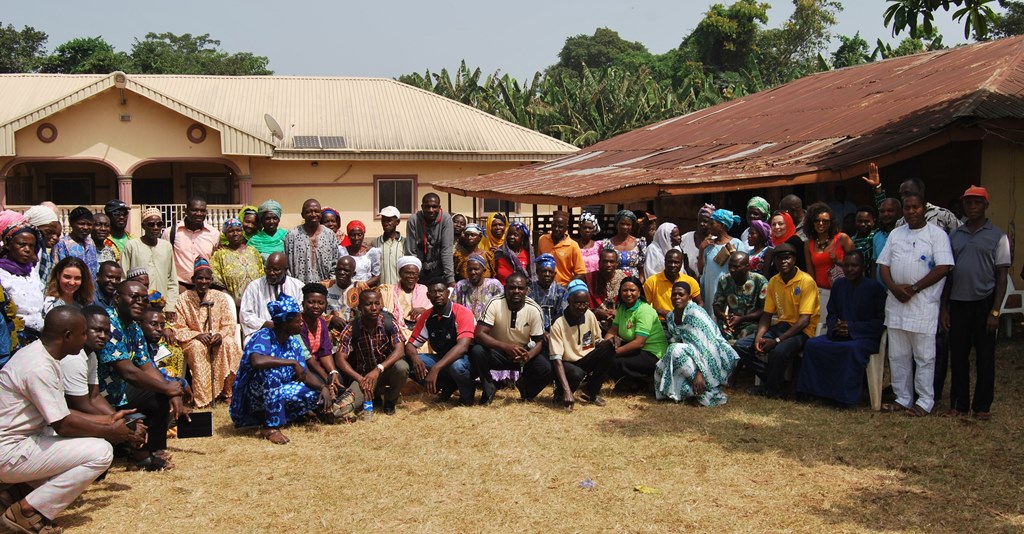
    Ewu community members with GEN-AFRICA conference delegates
    Some Ewu community members with GEN-AFRICA conference delegates

    The third highlight was a courtesy visit to the government house in Benin city to see the governor of Edo State, Godwin Obaseki. The delegation leader Fr. Anselm Adodo of Paxherbals, introduced members of the GEN international team and GEN-AFRICA team to the governor. During their interaction with the governor, the group made power-point presentations showcasing practical examples of their work in community development around the world, from solar solutions, to organic farming, greening of schools, eco-friendly architecture and many others.

    In his response, governor Obaseki thanked the visitors for their admirable work and expressed the willingness of the Edo State government to partner with Paxherbals, which is already a household name in Nigeria, and whose work and activities the governor commended, and also with GEN-AFRICA, so as to tap into their wealth of practical knowledge in community development.
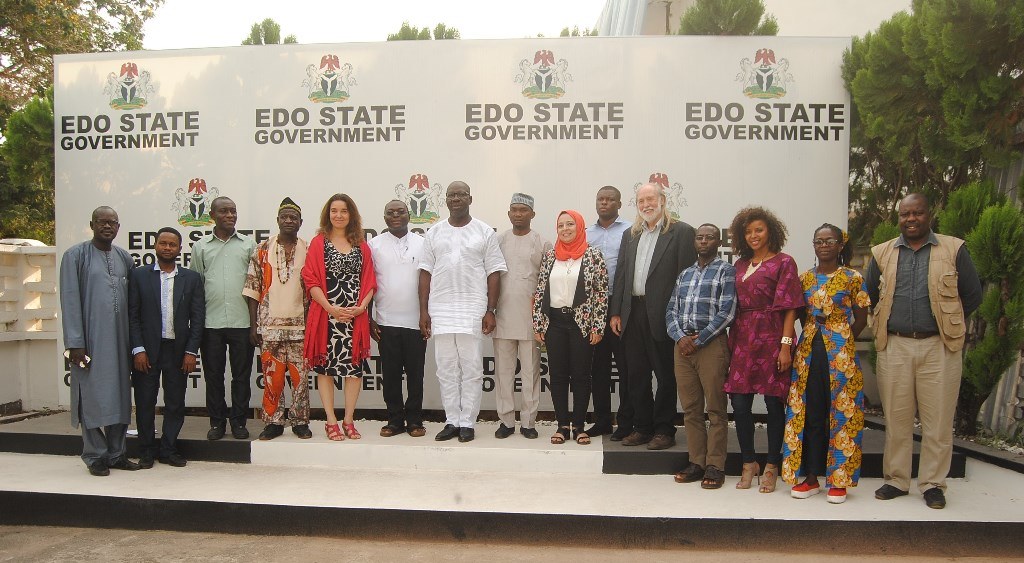
    Gen members with Edo state gov
    Governor Obaseki and Fr. Adodo with some members of Global Ecovillage Network in Benin City
  • New Developments in Clinical Trial of African herbal medicine for Malaria

    New Developments in Clinical Trial of African herbal medicine for Malaria

    The Nigeria Natural Medicine Development Agency (NNMDA) and Pax Herbal Clinic and Research Laboratories (Paxherbals), are into a partnership that will enhance the scientific practice of herbal medicine in Nigeria.  The two parties, through a memorandum of understanding, agreed to collaborate in the establishment of frame work for increased cooperation in clinical trials and public health research collaboration in the areas of Natural products, Natural Medicine, Traditional Medicine Knowledge and Practice, Intellectual Property Rights, Science and Engineering, Agricultural Practices and any other related field of work approved by the Parties’ respective authorities. Similar partnership to advance the cause of natural medicine has been agreed on with the malaria research unit at the University of Port Harcourt, Nigeria.

    Focusing of Malaria

    As a matter of priority, the two parties decided to collaborate in the design of a framework for clinical trial of PAX anti-malarial herbal medicine called Malatreat.  The decision was based on the fact that malaria still constitutes a major health challenge in Africa. It is a shame indeed that despite the fact that Nigeria is blessed with many scientists, researchers and herbal experts, they are yet to develop a standardized herbal medicine for malaria. This is a challenge which NNMDA, the University of Port-Harcourt and PAXHERBAL seek to confront.

    Although herbal medicines offer a wide diversity of medicinal properties and have proven to be a boom for therapies, its clinical evidence mapping is largely lacking and thus cannot be integrated into Nigerian public health structures. Also, there is a high prevalence of malaria in Nigeria, and clinical evidence mapping of herbal anti-malarias might be the innovation to improve malaria control and elimination programs.

    The Malaria Challenge vs. Paxherbal Malatreat

    Malaria is a national challenge in Nigeria requiring urgent intervention. The WHO documents that Nigeria uses herbal medicines in 60% of cases of early febrile diseases perceived to be malaria. Also, in the few systematic herbal medicine clinics across Nigeria and the many treatment homes existing in almost every hamlet, malaria and febrile conditions are the most encountered diseases by Traditional Medicine Practitioners (TMPs).

    The NNMDA and PAXHERBALS decided to draw up a proposal that seeks to evaluate the Pax-herbal anti-malaria (Malatreat) in use at the clinic and research laboratories of paxherbals and its environs, Ewu-Esan in Edo state Nigeria by utilizing a prospective observational study design.

    According to Pharmacist Ogar, a research fellow at NNMDA, and a key designer of the clinical trial proposal, few or no studies have illustrated methods to engage herbal medicine clinics in Africa and perhaps none in Nigeria on ways to describe and evaluate clinical use of herbal medicines as anti-malarial in patients. Observational clinical studies could be carried out to estimate the efficacy and toxicities of herbal anti- malarias in clinical protocols and thus document any adverse effects.  This should provide the needed opportunity to measure patient outcome in malaria patients exposed to the herbal drug in a clinical setting.


    Paxherbal maltreat was first registered by NAFDAC in 2008 as Paxherbal Malsol and has consistently passed regular tests and evaluation. It has a long history of safety and has been evaluation for toxicity, and have been certified safe for human consumption. 12 more Paxherbal products were further approved by NAFDAC in 2010. With over 36 registered herbal products for various diseases such as diabetes, High blood pressure and Arthritis, PaxHerbals has the highest number of NAFDAC approved herbal supplements in Nigeria.

    According to director of Paxherbals, Fr. Anselm Adodo, if herbal practitioners in Nigeria and Africa want to be respected and integrated into the national health care system as healthcare providers, they will need to upgrade their practice through research and innovation. Most often, herbal practitioners do more of boasting and making bogus claims about their products, rather than engage in serious scientific work.

    Paxherbal, ISTH and NNMDA Partnership

    Recently, the Irrua Specialist Teaching hospital in Irrua (ISTH), Edo State, expressed interest in the proposal and have teamed up with PAXHERBAL and NNMDA to carry out this innovative and historic study.  Such initiative is historic and revolutionary, and will be the first of its kind in Nigeria. The involvement of ISTH, a federal government specialist teaching hospital, in the research proposal also shows that conventional medical practitioners in Nigeria are willing to explore herbal medicine provided attention is given to rigorous research. Of course there will always be antagonists to any such partnership, but experience has shown that the future belongs to the people, and organizations, who are open to new possibilities and innovations.

    The three organisations, NNMDA, PAXHERBAL and ISTH are currently working round the clock to acquire all the needed permissions, including ethical clearance, in line with best international practice. The short-term goals of the project are

    • To Evaluate the effect of Pax-herbal anti-malaria (Malatreat) on Plasmodium falciparum 
    • To acquire evidence basis for utilization of the anti-malaria and to acquire necessary preliminary clinical data for the design of wide-scale Randomized Clinical Trial of the herbal therapy.
    • To prospectively review the clinical outcome from treatment of malaria patients with PAX herbal Malatreat and to    quantify   the   degree   of   parasitaemia   reduction   and antigenecity at every level of administration of Paxherbal Malatreat.
    • To determine clearance rate of parasitaemia in the bloodstream of patients’ administered Paxherbal malatreat.
    • To estimate the therapeutic efficacy and clinical safety of Paxherbal malatreat.
    • To acquire necessary clinical data for the design of Randomized Clinical Trial of the herbal therapies.

    In September 2017, Paxherbals forged a new partnership with Nigeria’s foremost medical research institute, the National Institute of Medical research (NIMR), to carry out clinical trials on some of the herbal products produced by Paxherbals, such as the malatreat for malaria, Diatea for Diabetes, Bitter tea for Hypertension and many others. Part of the partnership involves jointly setting up an herbal clinic and research unite at the institute, a very historic and significant move in the nation’s healthcare system.

  • Paxherbal Congress 2015: African Herbal Medicine in View

    Paxherbal Congress 2015: African Herbal Medicine in View

    Our affiliate Paxherbals writes a new chapter in the African story. It is in the area of alternative health for this and the future generation in a way that directly affects and impacts on the lives of people everywhere.

    The event was the Paxherbal congress 2015 held at Lumen Christi International School, Uromi on the 25th of August 2015.  It was one that can be said to have aggregated some many little details about our social and cultural life that, while often being counted as of little importance, hold values that are vital to our betterment as a people living in Africa.

    Paxherbal  as a Driving Force in African Traditional Medicine

    The event marks the beginning of several days when members of the “Paxherbal Family” comprising of the management of Paxherbals and staff,  Paxherbal Health Care Providers, Paxherbal product distributors, Paxherbal Depots handlers across Nigeria come together to share experience, knowledge and challenges encountered over the past year. It was about telling the world that natural medicine and healing using herbs and methods from the motherland is changing the quality of living of Nigeria and Africa and at little or no cost to the African people.

    Africans are known to be “people of the earth” or the cradle of oneness with nature but seems to be veering away from its century-old traditional values.  This is as a result of too much reliance on modern medicine at the expense of natural healing. The message from Paxherbals is that both conventional medicine and the natural healing methods which often comprises of herbal medicine and other methods ought to complement each other.

    The Paxherbal Congress seems to highlight “the little things”. The little things we don’t count as important that once added up could make the difference and bring Africans back to their roots. It is an approach that Paxherbals as the chief driver of healthier lifestyle through the utilization nature gifts

    It starts with the food with eat the laughter we share and the collected positive attitude of the people around us. This was reflected in the carefully choreographed event at the Paxherbal congress

    Meal: Back to our Roots

    It is conventional in social gathering across Africa to serve snacks like meat-pie or sausage and soft drinks to guests at such an event. Paxherbals had a different idea. The snacks served was the common garden egg, ground-nut and water as refreshement before the meal of the day.

    It was another opportunity to eat healthy knowing the immense health benefit of the common water, peanut and garden egg. It was meant to serve as a reminders that what we eat at every opportunity matters. This was also in line with the common African tradition before the advent of refined food, soft drinks and beverages.

    The Cultural Dancers from Esan

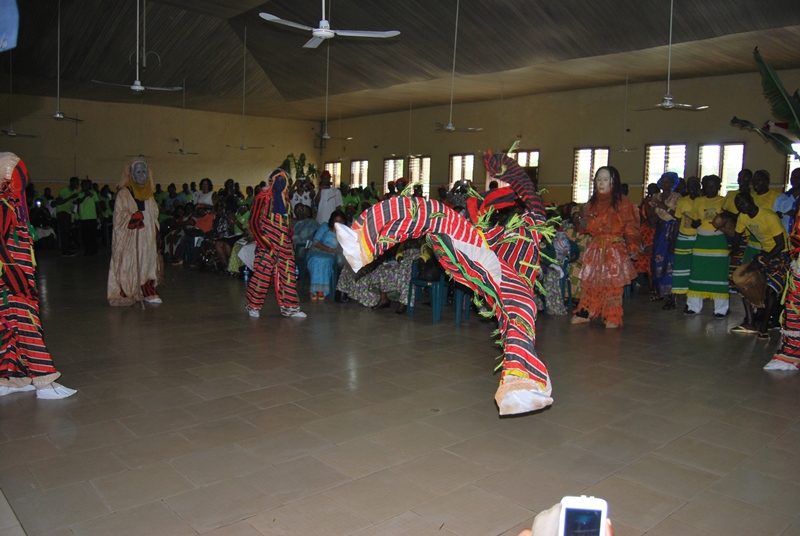
    it is customary at events in African to keep a place for the traditional dance of the people. Here to entertain the guests was the Uromi socio-cultural dance group performing the Atilogwu dance which has its origin in Eastern Nigeria. The Atilogwu dance is cultural dance which originated from the Igbo people of Eastern Nigeria.

    The Atmosphere

    Paxherbal Congress was staged within the hinterland of Uromi, Edo State of Nigeria. Uromi in Edo State of Nigeria is a place where nature is still at its prime and where a lot of cultural values within the African context still hold sway.

    written by: Anthony Ojo (@ojonow)