Tag: herbal degree

  • Fr. Anselm Adodo Delivers Faculty Lecture at University of Ibadan

    Fr. Anselm Adodo Delivers Faculty Lecture at University of Ibadan

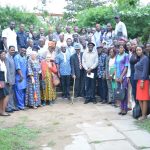
    On July 25, 2018, Fr. Adodo delivered the faculty lecture at the University of Ibadan.  The seminar lecture series is sponsored by the council for the Development of Social Science Research (CODESRIA). The seminar, which held at Lady Bank Anthony Hall, at the Institute of African Studies, University of Ibadan, was attended by an unprecedented crowd comprising students, university professors, Researchers, government officials, Politicians, and celebrities. Chairman of the occasion, Prof. David Okpako, retired prof of Pharmacology at the University of Ibadan, set the scene by emphasising the importance of studying Africa with African eyes; that is, Africans tackling issues of culture, race, economics, and development from their own perspective and based on their own worldview.  The in-coming Director of the institute, Dr. Jimoh Olaoluwa, expressed his delight at the high turn-out of participants and the interest which Transformation Studies have generated in the University.

    In the lecture, which was titled: ‘Transformation Studies in Africa. Researching Africa with African Eyes’, Fr. Adodo went straight to the point. According to him: ‘The first part of African liberation story was the ‘successful’ struggle for political independence from the colonial powers. The second part was the era of independence when power ‘successfully’ shifted to the African Nationalists. This paper argues that the third part towards African emancipation is for the common people of Africa to free themselves from their leaders. African leaders, from Zimbabwe to Uganda, Cameroon, Liberia, Burundi, Togo, Nigeria, Ivory Coast, Senegal to the Benin Republic, Kenya and the Democratic Republic of Congo, to mention a few, have obviously betrayed the trust of their people They have succeeded in amassing state wealth into their own private pockets and lacked the will, skill, and sincerity to govern and transform their countries. It is therefore evident that Africans should not expect much from their leaders and must now learn to free themselves from the greed of their leaders. Civil wars or violent protests, as we saw in the so-called Tunisian and Egyptian uprising, cannot make this happen. This paper posits that a more systematic approach, that evolves from the ground up, naturally and culturally, technologically and economically, within a functional polity, is the most efficient and sustainable way to transform Africa. The theory and practice of such an approach is the basis of the new curriculum on Transformation studies in Africa (TSA).’ 
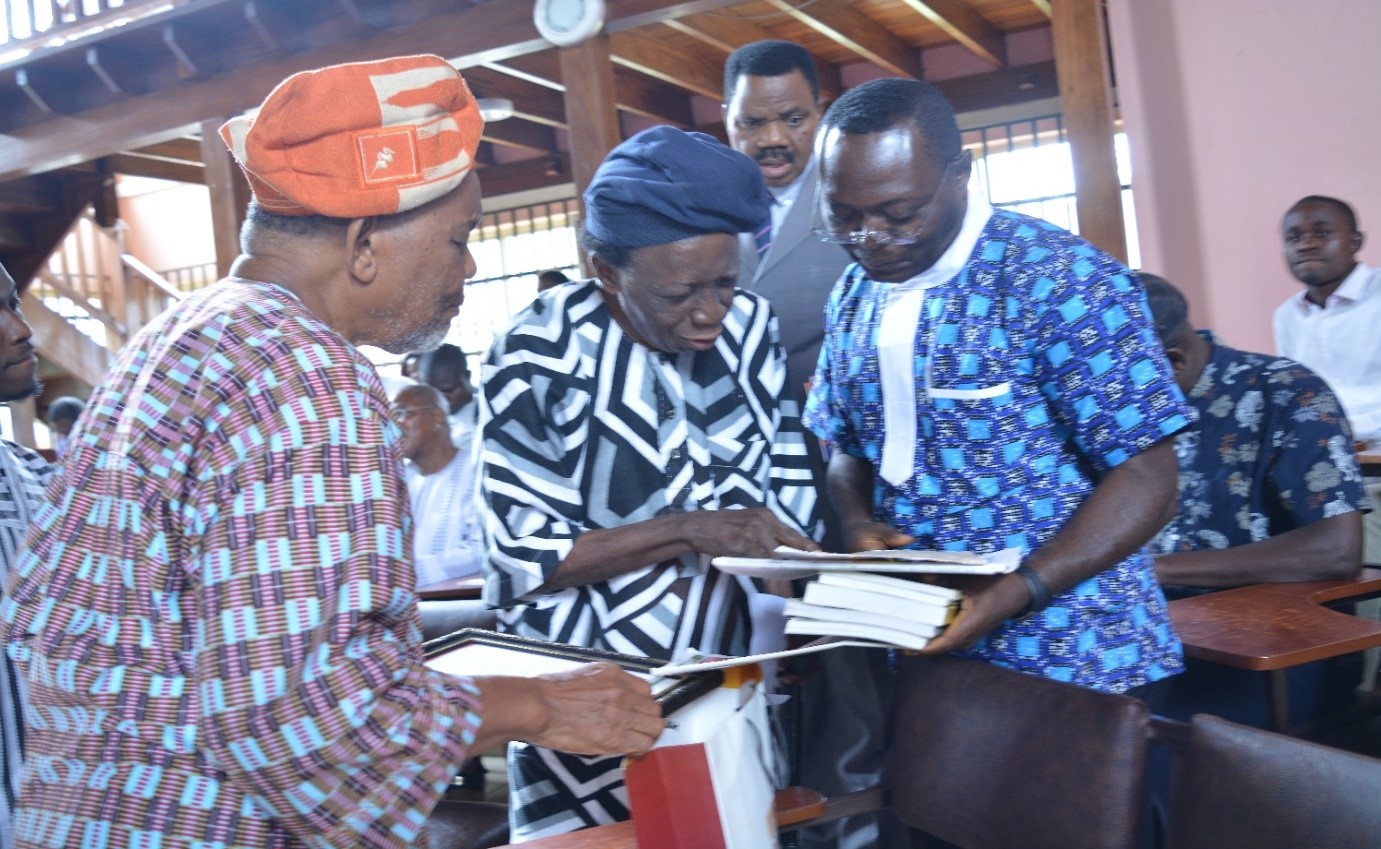
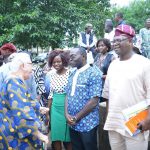
    Fr. Adodo, Dr. Omolulo Olunloyo, Former Governor of Oyo State, and Prof. Joseph Okogun, now a visiting Professor
    Fr. Adodo, Dr. Omolulo Olunloyo, Former Governor of Oyo State, and Prof. Joseph Okogun, now a visiting Professor in the USA,

    Quoting an African Proverb which says that, ‘Until the Lion learns to write, every story will glorify the hunter’ and also Chinua Achebe’s words: ‘If you don’t like someone’s story, write your own’, Fr. Adodo passionately argues that Africans need to stop blaming the foreign powers for their woes, but rather, face their problems with courage and determination, and learn to tell their own story in their own words, metaphor, and Language. According to him: ‘Many African nations are yet to upgrade, renew and evolve their knowledge bases. They find a lazy and easy excuse in referring to times past, the ‘good old days,’ to ancient ways of life that are not compatible with modern realities. Others blame Colonialism, Capitalism, Civilisation or Modernity. It is true that we were once enslaved; it is true that some capitalist foreigners invaded our land and ruled over us and exploited our natural resources for selfish gains. But were we the only race that was so colonised? And how long shall we continue to blame other people for our woes? Is it not time we courageously face our problems and see them as challenges for growth? When a man in faraway Spain says something derogatory about a black man, we all rightly stand up in protest against his racist tendencies. But why wouldn’t we also wage war against the tribalist in each of us, among our own kin?’
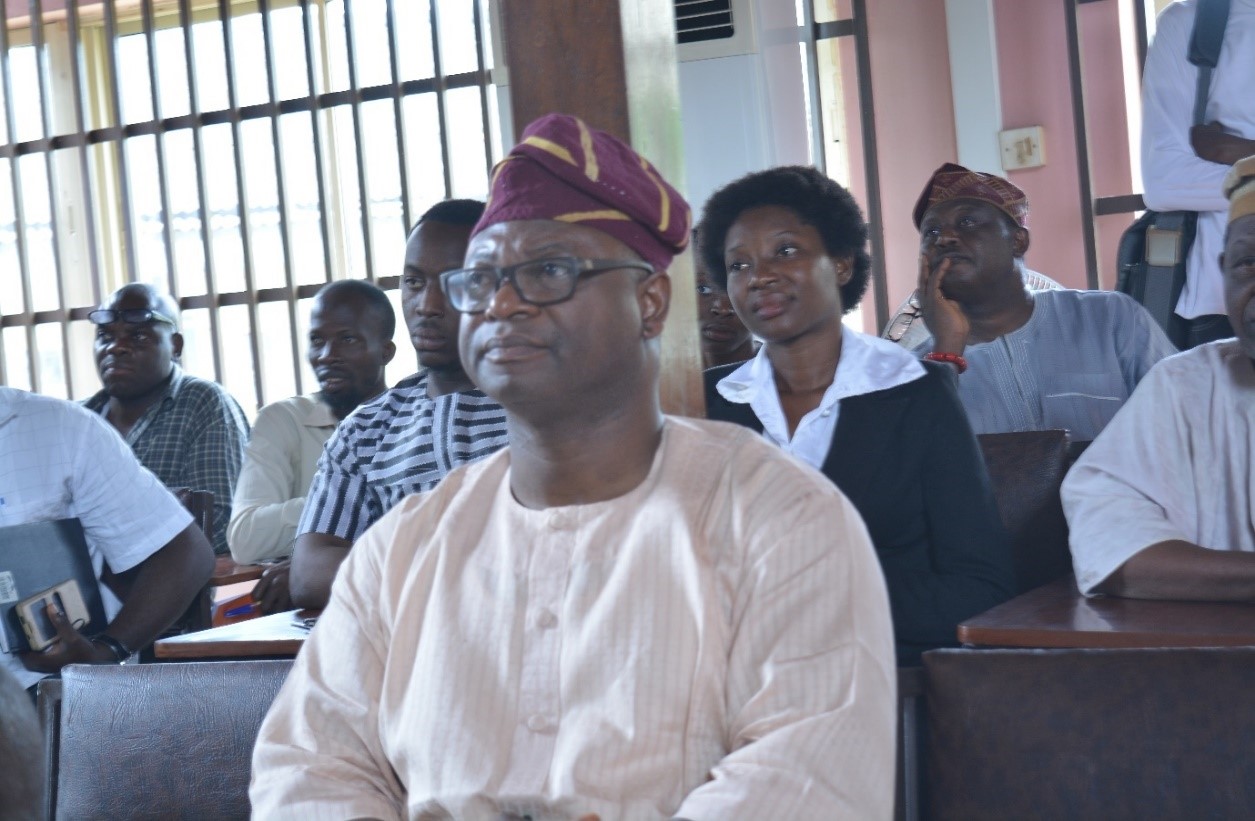
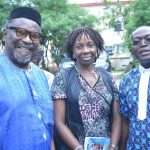
    Oyewole Oyewumi, Oyo state commissioner for Agriculture, Natural resources and Rural Development
    Oyewole Oyewumi, Oyo state commissioner for Agriculture, Natural resources and Rural Development

    Fr. Adodo re-emphasised the fact that for Africans, economic and social freedom are not enough.  The most important freedom, according to him, is cognitive freedom. In his own word: ‘People cannot be liberated by consciousness and knowledge other than their own. It is therefore essential that Africans develop their own indigenous consciousness-raising and knowledge generation, and this requires the social power to assert this. It is not enough to engage in education, the structure of the knowledge itself has to be examined and questioned. It is not enough to study scientific truths, how science arrived at such ‘truths’ has to be challenged. Science does not exist independently of its cultural context, despite its pretence to undiluted objectivity. While education can bring liberation, it can also be a means of keeping people in bondage.

    In conclusion, Fr. Adodo said that: ‘We need the cognitive freedom to help us resist the danger of being ‘storyotyped’ (origin of the word stereotype) again, as our ancestors were. This is what Transformation studies in Africa is about: researching Africa with African eyes.

    More photos from the event

  • Transformation Studies In Africa: An Historic Beginning

    Transformation Studies In Africa: An Historic Beginning

    On May 10, 2018, the newly designed curriculum titled Transformation Studies in Africa started on a high tone with 12 pioneer masters students and one prospective PhD candidate, at the Institute of African Studies, University of Ibadan. The program, which is a partnership between Ofure (Pax) Centre for integral research and Development, The University of Ibadan and Trans4m Centre for Integral Development, is the first of its kind in Africa.

    During a prolonged academic interaction with the faculty staff, Fr. Anselm Adodo, explained that Transformation studies are an evolution of African studies, which grew under the tutelage of colonial scholarship. African studies originated from Europe and were designed as Western scholars studying African people and culture from the western point of view. Most often, such studies were coloured by the prejudices and biases of the foreigners. With transformation studies, Africans can study Africa with African eyes and in their own language and metaphors.

    Transformation Studies in Africa, code-named TSA, aims to ‘release the GENE-IUS’ of Africa. It aims to study African issues, African realities, African problems from the African point of view, and provide African solutions to African problems. TSA, according to Adodo, is Africa writing her history based on her own experience, in line with the African proverb, ‘until the Lion learns to write, every story will glorify the hunter’.

    Director of the Institute of African Studies, Dr Ohioma Pogoson, expressed his delight at the successful take-off of the program. The number of the successful candidates, according to him, is a good indication that TSA might well turn out to be the most successful and crowd-pulling program offered at the institute. The immediate past director of the Institute, Prof. Dele Layiwola, observed that it is unusual for a brand-new program as TSA to have such a high number of candidates. He also announced that the program would begin admission of PhD students in 2019, another milestone for such a new program. In fact, a PhD candidate has already applied and has opted to wait patiently till 2019 to join the program rather than
    enrol for another course.

    Fr. Adodo thanked all those who were involved in the curriculum development process and planning stages: Prof. Layiwola who was then the director of the Institute, Dr. Femi Jegede, who worked tirelessly to ensure that the program passed through the various screening stages at the University of Ibadan, and Dr. Pogoson who gave his support to the program as the new director. He also thanked Professors Lessem and Schieffer of Trans4m centre for Integral Development for their interest in Africa. Both Lessem and Schieffer were actively involved in the development of the curriculum and even visited, along with Fr. Anselm Adodo, the Vice Chancellor of the University in 2016.

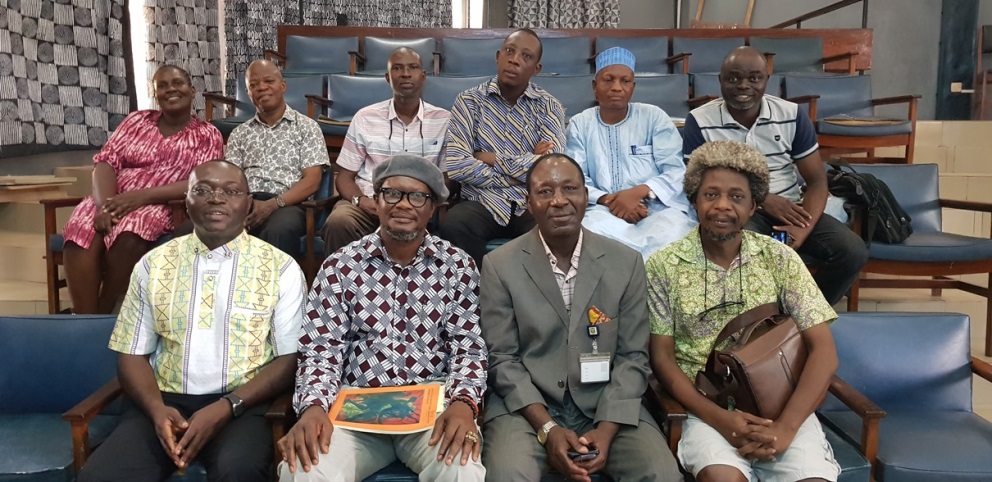
    Fr. Anselm Adodo with the director and faculty staff of the Institute.
    Fr. Anselm Adodo with the director and faculty staff of the Institute.

    During interaction with the students, Fr. Adodo congratulated the new postgraduate students and
    informed them that joining the TSA program might well be one of the most significant decisions of their lives. TSA, according to him, is radically different from other courses at the university, as it is reform-oriented, and aims to encourage students to think and act differently. The students expressed their delight at being selected to join the program. They said they entered the program because they want to become agents of Transformation in their communities, society, the country and the world and that the term, ‘Transformation’, struck a chord in their hearts. As a further sign of interest and attention which the program has generated, Fr. Adodo has been invited by the Institute to present a paper on African
    Transformation at the prestigious Faculty seminar of the University in July 2018.

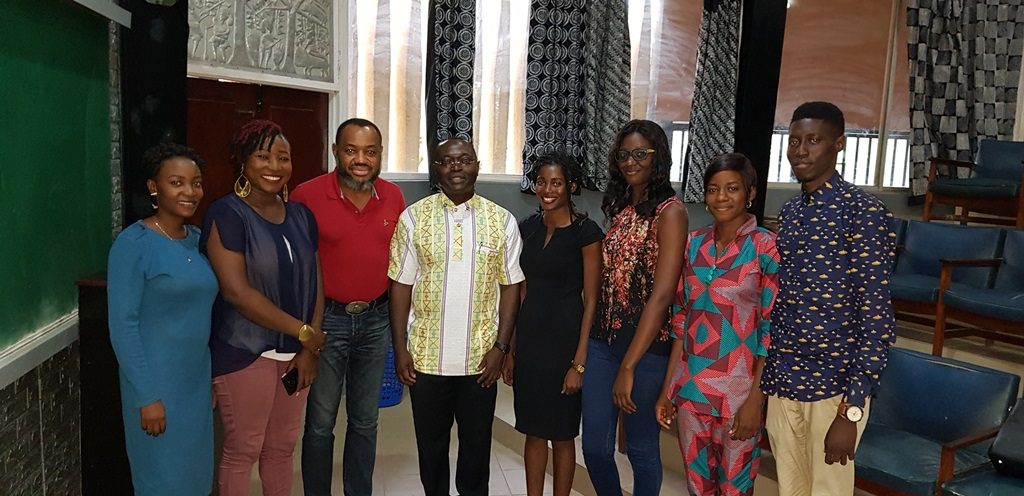
    Fr. Adodo with some of the pioneer post-graduate students
    Fr. Adodo with some of the pioneer post-graduate students
  • Redesigned Curriculum Changes how We Learn Herbal Medicine

    Redesigned Curriculum Changes how We Learn Herbal Medicine

    Paxherbals and the Institute of African studies, University of Ibadan, have formed a partnership in transforming the study and teaching of herbal medicine in Nigeria.

    This year, the two bodies redesigned a new Masters and PhD curricula on Traditional African Medicine. The curricula have been approved by the University’s curriculum committee and the Institute will soon begin to admit masters and PhD candidates in Traditional African Medicine.  This is another milestone in herbal medicine development in Nigeria.

    Group photo
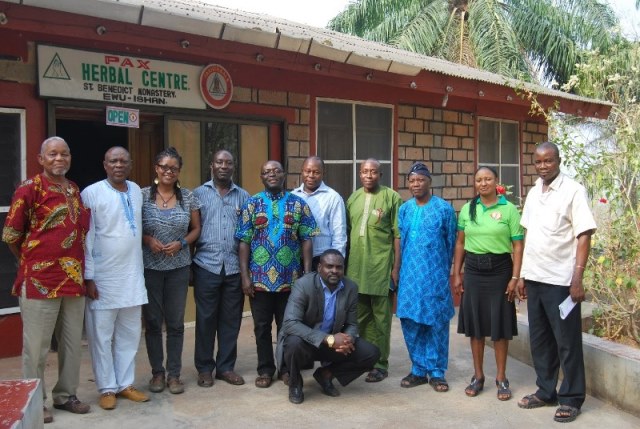
    Third from left: Prof. Dele Layiwola, Director of the Institute of African Studies, University of Ibadan, and his team on an official visit to Paxherbal in January 2016

    The outgoing director of the institute, Prof. Dele Layiwola, on his visit to Paxherbal laboratories in Edo state, expressed satisfaction at the high level of research commitment at Paxherbals, and encouraged Paxherbals not to relent in their mission of changing the face of traditional medicine in Nigeria.

    Coordinator of Traditional medicine program at the Institute of African studies, Dr. Jegede, lamented that herbal medicine is a goldmine that has been neglected for too long, and needs urgent attention in Nigeria.

    The Vice chancellor of the University of Ibadan, Prof. Idowu Olayinka, expressed his satisfaction with the research partnership between Paxherbal and the Institute of African studies, and commended the director of Paxherbal. Fr. Anselm Adodo, for his visionary and open minded approach to research and transformative education in Nigeria.

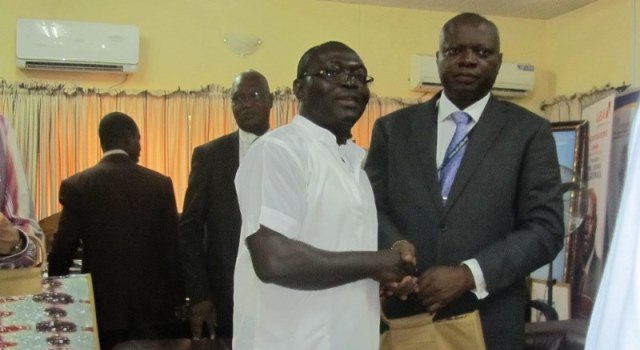
    VC and Adodo
    The vice chancellor, University of Ibadan, presenting a gift to Fr. Adodo after deliberations on research partnership at the university in May 2016.

    During an official visit to the Vice chancellor in May 2016, Fr. Adodo commended the University of Ibadan for their openness to new ideas.   According to him, ‘Higher technical education is increasingly recognized as critical to development, especially with growing awareness of the role of science, technology and innovation in economic growth.  Universities and research institutes are well placed to aid development through their involvement with local business industry and society.

    Universities and institutions in developing countries can aid development by focusing some of their technical training on specific development needs. Nigerian polytechnics were established precisely to meet the needs for technical training in various fields of expertise in order to hasten development. Unfortunately, the craze for university decrees and the prestige of being labelled a ‘university graduate’ often made polytechnic graduates feel inferior and less valued’.

    The director of the institute of African Studies at the university, also commended Fr. Adodo for his central role in the designing of a new post-graduate curriculum called ‘African transformation studies’, which has been approved by the university’s curriculum committee and the post-graduate school. The course aims to equip students with new practical skills in technological and social innovation, so that they can become transformation agents in in their different communities.