Blog

  • COMMUNITALISM IN ACTION

    COMMUNITALISM IN ACTION

    [embedyt] https://www.youtube.com/watch?v=dc8Q2WZ_m0g[/embedyt]

    An interpretation of the theory of Communitalism by students of International Development at the University of St Galen, Geneva, Switzerland, in association with students of integral transformation at Paxherbals.

  • TOWARDS INTEGRAL LIVING IN EWU MONASTERY: Communis, Spiritus, Scientia and Economia

    TOWARDS INTEGRAL LIVING IN EWU MONASTERY: Communis, Spiritus, Scientia and Economia

    Watch video of integral living in Ewu Monastery, Edo state of Nigeria. This video captures some of the tenets of Communitalism.

    [embedyt] https://www.youtube.com/watch?v=AtZ_xoBJifM[/embedyt]

  • The Pioneer Students Transformation Studies in Africa [Video]

    The Pioneer Students Transformation Studies in Africa [Video]


    [fullscreenvideo videourl=”https://youtu.be/tGFp-4BmBJc”]

    Watch video of the pioneer students of Transformation Studies in Africa (TSA) from the Institute of African Studies, University of Ibadan, Nigeria. This is the first fruit of a project with a very humble beginning

  • The Idea Of The Communiversity

    The Idea Of The Communiversity

    ABOUT THE BOOK

    Across the world, we are facing a crisis in education at all levels: for some communities, schooling remains inaccessible, and for others, educational institutions have become elite qualification factories. For most, the cost of higher education is rising.  Underlying these profound challenges are fundamental questions about the nature of universities and higher education in general.

    What kind of knowledge do we need to survive in the present century and next? Do the current modes of knowledge creation and application address the challenges of the 21st century? How do we bridge the dichotomy between being and knowing, research and innovation, theory and practice? Perhaps for the first time, a group of scholars—a veteran Afro-European political philosopher, a Catholic cleric and social scientist, and an Anglican priest/political economist—have taken a step further and asked: is it possible to re-imagine and re-invent the global university system?

    In The Idea of the Communiversity, they propose a new approach to the economic, social, technological, educational and moral transformation of society. This book takes an integral world’s approach to societal transformation, by pointing to ways in which we can reform our modes of knowledge creation. Through the fourfold model of community, pilgrimium, academy and co-laboratory, Lessem, Adodo and Bradley—all intellectual and grassroots activists—have re-conceptualised a university for every people and culture, centred on the need to think local and act global.  We have seen the eras of post-colonialism and decoloniality. This book ushers us into a new one—that of the Communiversity.

    ABOUT THE AUTHORS
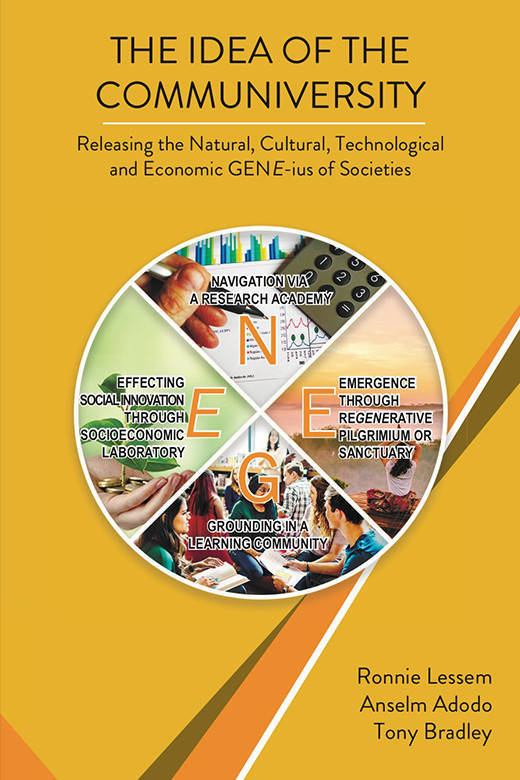
    The Idea of the Communiversity was born out of the communal, conscious raising and the conceptual and commercial experiences of three people: Samanyanga Ronnie Lessem, an Afro-European social philosopher, Anselm Adodo, a Nigerian-Benedictine priest, philosopher and social scientist, and Tony Bradley, a Celtic-Christian intellectual activist. Each of them, in association with their academic and commercial organisations and societies, spread altogether over 120 years, has sought to transcend the divide between industry and academe, the spiritual and the material, community and economy, one cultural world and another. Each of them has devoted a lifetime to bridging different worlds, most especially those of community and university, albeit also aligned with spirituality and with enterprise, spread across the south and the north, the east and the west

    PRAISE FOR THE BOOK FROM ACROSS THE DIFFERENT WORLDS

    FROM THE SOUTHERN WORLD

    ‘The ‘‘Communiversity” idea is timely. It challenges the dominance of the conventional University. What is even more exciting and appropriate is the fact that this birth is being presided over by Africans, alongside significant others around the world, representing the authentic natural grounding critical for knowledge creation and societal renewal altogether. The Comuniversity is clearly an answer to a distraught world in which the conventional University has failed to provide solutions. For me,  “University” speaks of individualism and selfishness leading to destructive detachment from reality, whereas “Communiversity” speaks of community and teamwork leading to inclusive, transformative development. The time for the Communiversity has indeed arrived!’

    Douglas Mbowane, CEO, Econet Wireless, Harare, Zimbabwe.

    ——————————————————————————————————————–

     ‘The Idea of the Communiversity’ is at the frontier of the decolonisation project in Africa and the global South.  It is a long-awaited book that makes it clear that it is possible to decolonise knowledge production by reconnecting the sites where knowledge is produced (universities) and the sites where it is applied or practiced (community). Written by eminent African-oriented scholars, the book provides a clear answer to people who are seeking answers to the question: What does the decolonisation of knowledge and the curriculum entail?  This is a must read for any person (student, researcher, activist, teacher, professional, politician), interested in learning about the practical implications of transforming the African university and beyond. The book carries a revolutionary seed for changing the way we produce and validate knowledge.’

    Horman Chitonge, Associate Professor at the Centre for African Studies, University of Cape Town, South Africa, and author of Economic Growth and Development in Africa: Understanding Trends and Prospects.

    —————————————————————————————————————-

    ‘The very concept of ‘communiversity’ demonstrates that there are thinkers among us who are rising to the current global systemic and epistemic crisis, characterised not only by uncertainties of knowledge but by the very idea of a university being questioned and universities turning into the key site of struggles. ‘The Idea of the  Communiversity’ is a welcome contribution, which transcends seeking to know the world of knowledge and its politics but, courageously and innovatively, offers a way in which to change it. I have nothing but praise for this important book.’

    Professor Sabelo J. Ndlovu-Gatsheni, author of Epistemic Freedom in Africa: Deprovincialization and Decolonization. Head of Change Unit, University of South Africa, Pretoria.

    —————————————————————————————————————

     ‘The sheer audacity and intellectual confidence to think outside the box and initiate an alternative approach to education and development, as demonstrated in this book, is commendable. Kudos to our own Fr Adodo and his counterparts across the world. As a responsible government, we cannot afford not to listen to these voices of reason.’

    Godwin Obaseki

    Executive Governor, Edo State, Nigeria.   

    ————————————————————————————————————–

    ‘This book is timely. It comes at a time when scholars are in search of the Model University that would be more relevant to the social and economic needs of the 21st century.  The need to forge a union between industry and academe, community and economy and revamp the spiritual and moral foundation of society cannot be more pressing than now.  The world needs a university model that can reconcile it with nature, community and the environment. I applaud the vision behind the book.’

    Professor Ben. E. Aigbokhan, Vice-Chancellor, Samuel Adegboyega University, Ogwa, Nigeria.

    ———————————————————————————————————————-

    ‘This book is an invitation to reconnect with the healing power of nature: a spiritual, psychological, cultural and technological Renaissance. Theology, Medicine, Law, Technology and the  Liberal Arts constitute important issues in the communiversity and related institutions-an era of the social laboratory. The authors clearly expended great energy, enthusiasm, efforts and patience to produce this work.’

    Professor Abiodun Falodun, Rector, Edo State Polytechnic, Nigeria.

    ——————————————————————————————————————-

    ‘A masterpiece. Daring to think differently. A profound work of impeccable scholarship.’

    Professor Oluwatoyin Ogundipe, Vice-Chancellor, University of Lagos, Nigeria.

    ——————————————————————————————————————

    FROM THE EASTERN WORLD

    The Idea of the Communiversity’ is a compelling and enlightening read. It is a genuine effort to reap the fruit of integral knowledge. By reinventing terms for this knowledge, the authors are able to coin an authentic definition of learning, where the roots of meaning evolve from communities. Communiversities are live organisms that stem and grow in their unique soils of origin.’

    Senator Haifa Hajjar Najjar, Jordanian Senate House: The Upper House of Jordanian Parliament.  ———————————————————————————————————————

    ‘As ‘humanity’ seems to be less and less of a commodity in our workplaces and societies, it is prime time to return human consciousness and a sense of belonging in the world. The Idea of the Communiversity offers a new path – an integral approach to learning and being that is rooted in one’s self and community, while embracing global knowledge and enterprise to make a genuine difference in the world we live in.’

    Dr Hassib Sahyoun, Founder and CEO, Medlabs Jordan.

    ——————————————————————————————————————-

    ‘An intellectually stimulating book. It challenges the conventional Eurocentric narrative and puts forth an alternative development approach, nesting together often undermined forces of the community, local knowledge and spirituality – combined, they present a new paradigm of inclusive development. A unique effort – like a breath of fresh air.’

    Dr Amjad Saqib, the Founder of Integral Finance (Akhuwat), Pakistan.

    FROM THE NORTHERN WORLD

    ‘A truly inspiring text that proposes a visionary and unique approach to community, culture and academia in changing socio-economic times. The idea of communiversities challenges historic practice and embraces our current local culture with a new mindset and in a new way.’

    David E. Jenkins, CEO – The Old Courts Arts & Heritage Trust, Wigan, UK.  

    ————————————————————————————————————————

    ‘Ronnie Lessem is always worth listening to. He challenges the normal and inspires the extraordinary. This book could change your life and our world.’

    Dame Jayne-Anne Gadhia, ex CEO, Virgin Money, Founder of the Gadhia Group, UK.

    ———————————————————————————————————————              

    ‘The authors argue the urgency of re-situating knowledge/learning communities in historical time and diversity of culture and place.  They recall the complex genealogy of Western knowledge institutions (library, monastery and academy, through medieval Republic of Letters, to modern university and laboratory): they insist on the interplay of oral and written forms of knowledge; and on the links between learning, reconciliation, healing and human community.  And then, politely, on the challenge to “subvert the epistemological scaffolding” that underpins current Western hegemony (and its discontents) — developing through world examples the proposition that “in the present moment, it is the global south that affords privileged insight into the workings of the world at large”.  They show that the time has arrived for the resurgence of an intellectual ‘appropriate technology’.’

    Professor Martin O’Connor, Professor of Economics, Université Paris-Saclay, France.

    —————————————————————————————————————–

    ‘From social innovators in local communities to top leaders of our societies, from rural communities to academia, we urgently need the change of perspective elaborated in this book. In order to release the GENE-ius of Self-Organisation-Community-Society – including Economy – the paradigm shift that these authors advocate includes overcoming the over-emphasis of “Western” and “Northern” perspectives in knowledge creation and sharing. Learning rooted in nature and community, as well as culture and spirituality, are indispensable elements of the  “communiversity”. The communiversity idea will effectively promote the knowledge-and-institutional transformation needed to address the burning issues of our time.’

     Dr Darja Piciga, founder of the Citizens’ Initiative for Integral Green Slovenia.                                                  

    ——————————————————————————————————————-

    FROM THE WESTERN WORLD

     ‘In this path-breaking book, Lessem, Adodo and Bradley call for a novel re-conception of the modern techno-centric university. In place of the hierarchical and individualistic university, these scholars propose an institution that is spiritual in purpose, that is communitarian in orientation, and that seeks the transformation of the individual and her society. They call this reimagining of the university a “communiversity” and view it as a combination of a community of scholars, engaged in a transformative journey (pilgrimium), that is both an inclusive academy and a functional laboratory. This book is a call to action for educators and activists to create an institution that can work to change concrete societal problems.’

    Professor Kenneth B. Nunn, Professor of Law, University of Florida, USA.        

    —————————————————————————————————————–

    ‘In ‘The Idea of the Communiversity’, Lessem, Adodo and Bradley guide us on an epic journey toward reimagining knowledge creation and its application for the purpose of bringing integral transformation to a world in desperate need. Drawing on the historic roots of knowledge creation and transmission, the authors propose a newly integral “Communiversity” as an alternative to the now moribund traditional university construct, where one’s size is supposed to fit all learners. In a world rife with endemic challenges without solutions, the Communiversity’s core elements of Community, Pilgrimium, Academy, and Laboratory offer new hope for the challenges our world faces, by excavating long neglected indigenous knowledge sources that can lead to innovative solutions both local and global. The time has come for the Communiversity!’

    Dr Sam Rima teaches at Bethel University, Minnesota, USA. He is author of Spiritual Capital: A Moral Core for Social and Economic Justice.

    You buy this book online from Paxyou website by clicking on the buy now button below

    [imic_button colour=”btn-default” type=”enabled” link=”https://www.paxyou.com/product/the-idea-of-communiversity-releasing-the-natural-cultural-technological-and-economic-gene-ius-of-societies/” target=”_blank” extraclass=”” size=””]Buy This Book Now[/imic_button]

  • A Man Like You

    A Man Like You

    A Poem by Fr. Anselm Adodo


    I knocked at your door
    The door of your heart.
    Can you not hear me?
    Open for me, my brother!
    I knocked at the dawn of my sleep
    I knocked at the wake of my day
    I knocked with the veins of my heart
    I knocked at the fall of my power
    Can you not hear me?
    Open for me, my sister!
    You asked me if I am a Christian
    Or a Muslim, or a pagan.
    You want to know if I am of your tribe
    Or speak the tongue of your father
    Or dream the dream of your mother
    Before you would open for me.
    What does it matter if I am white or black
    Green or yellow
    Short or tall?
    You want to know who I am?
    I am bone of your bone
    And flesh of your flesh
    I am a Man like you!
    Open for me, my brother!

  • Paxherbals and the Catholic Church of England and Wales: A Unique Partnership

    Paxherbals and the Catholic Church of England and Wales: A Unique Partnership

    The Pax herbal Clinic and Research Laboratories (PAXHERBALS) and its subsidiary, the Pax Integral Research and Development Initiative (OFIRDI) have signed an MOU with the Catholic Bishops Conference of England and Wales, to provide training in sustainable agribusiness for the young people of Edo State, Nigeria. The project is termed human livelihoods for self-sufficiency.
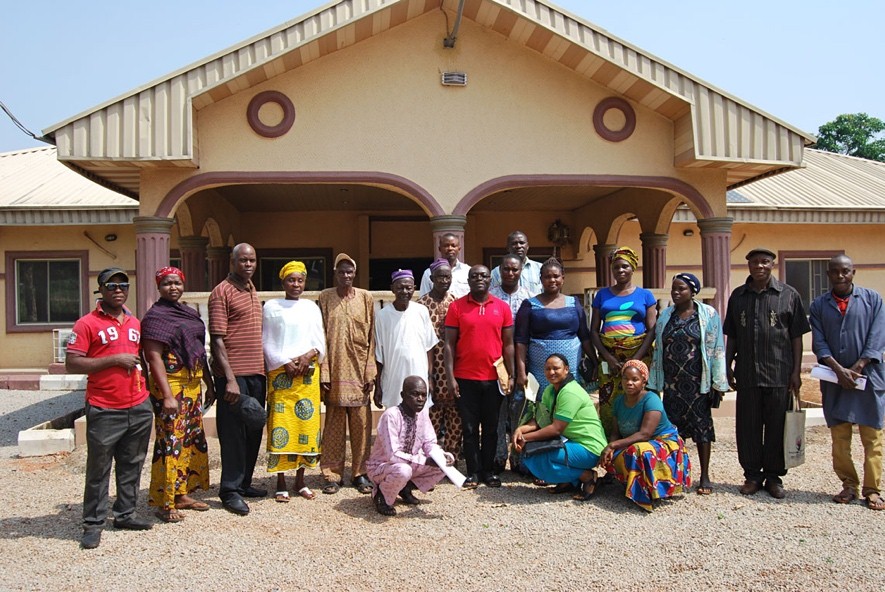
    The objective of the human livelihoods project is to provide young people in Edo State and Nigeria with training and employment, both directly and indirectly, as an alternative to the risks of being trafficked into modern slavery and exploitation, injury, death and crime, which very many faces if they travel in reliance on the promises of ‘well-paid work’ abroad.

    The human livelihoods project differs from the ‘help the poor’ approach that tends to make people perpetually dependent. The project is based on a model of development that gives a once-off help, to enable the trainee to become self-sufficient and independent.
    The strategy is as follows:

    1. To develop training farms which offer young people the opportunity of training in agriculture and agri-business based on a contextual Straining model developed by OFIRDI for African rural economies. This model provides a broad agricultural training, skills certification and the opportunity to develop interests in specific areas of agriculture or agri-business which can provide a post-training livelihood.

    2. Pax Herbals buys all the agricultural products from the trainees and helps them to sell to buyers. In this way, Pax herbals serve as an intermediary between the farmers and the buyers to ensure proper pricing. It often happens that local farmers are forced to sell their perishable agriculture products such as tomato, mango, oranges, papaya and other fruits at giveaway prices because of lack of food preservation technology. If they don’t sell, then they lose everything as the products get spoilt easily. The buyers from the cities know this, so they compel the local farmers to sell to them at the lowest possible price, while they sell to consumers in the cities at the highest price.

    3. More importantly, the local farmers are taught to become manufacturers. This means that they cultivate innovative attitudes towards agriculture and business. Rather than the selling of their raw materials, they are trained to convert them into finished products. An innovation hub is being set up to coordinate the interaction between the producers, sellers and buyers. The income from such a centre would be used to provide stipends for youth who are undergoing training on the farms and thus encourage them to complete their training. Moreover, a role in, or operating such a business could provide livelihoods for trainees after completion of their agriculture and agribusiness programmes.

    4. For us, a new economic model that is built on African worldviews, cultural values, creativity and community is not only possible but urgently needed in Africa. Beyond money and finance, such an economic model, built on Nature, community, ecology and humanity, is a better driver of sustainable and integral development in Nigeria and Africa. A few examples: A $10 basket of tomato is sold for $100 when dried and packaged in sachets as tomato powder or chips. An $8 basket of fresh mango is sold for $200 when dried and converted into mango chips. A $2 tuber of yam is sold for $100 when the peels are dried into medicinal powder for sickle cell anaemia, and the tuber is dried and packaged as yam flour. The principle is simple: produce what you consume and consume what you produce.
  • Fr. Anselm Adodo Delivers Faculty Lecture at University of Ibadan

    Fr. Anselm Adodo Delivers Faculty Lecture at University of Ibadan

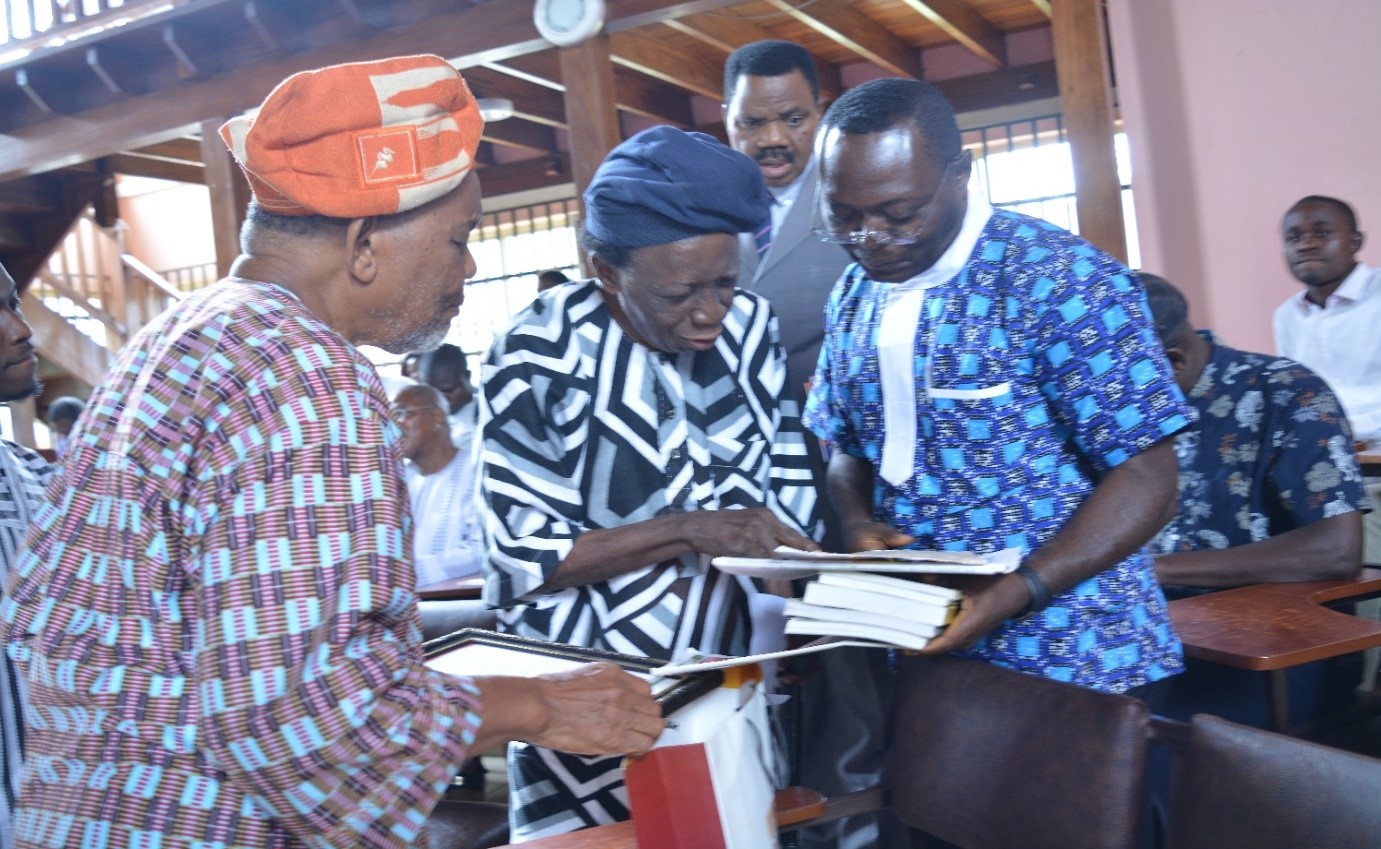
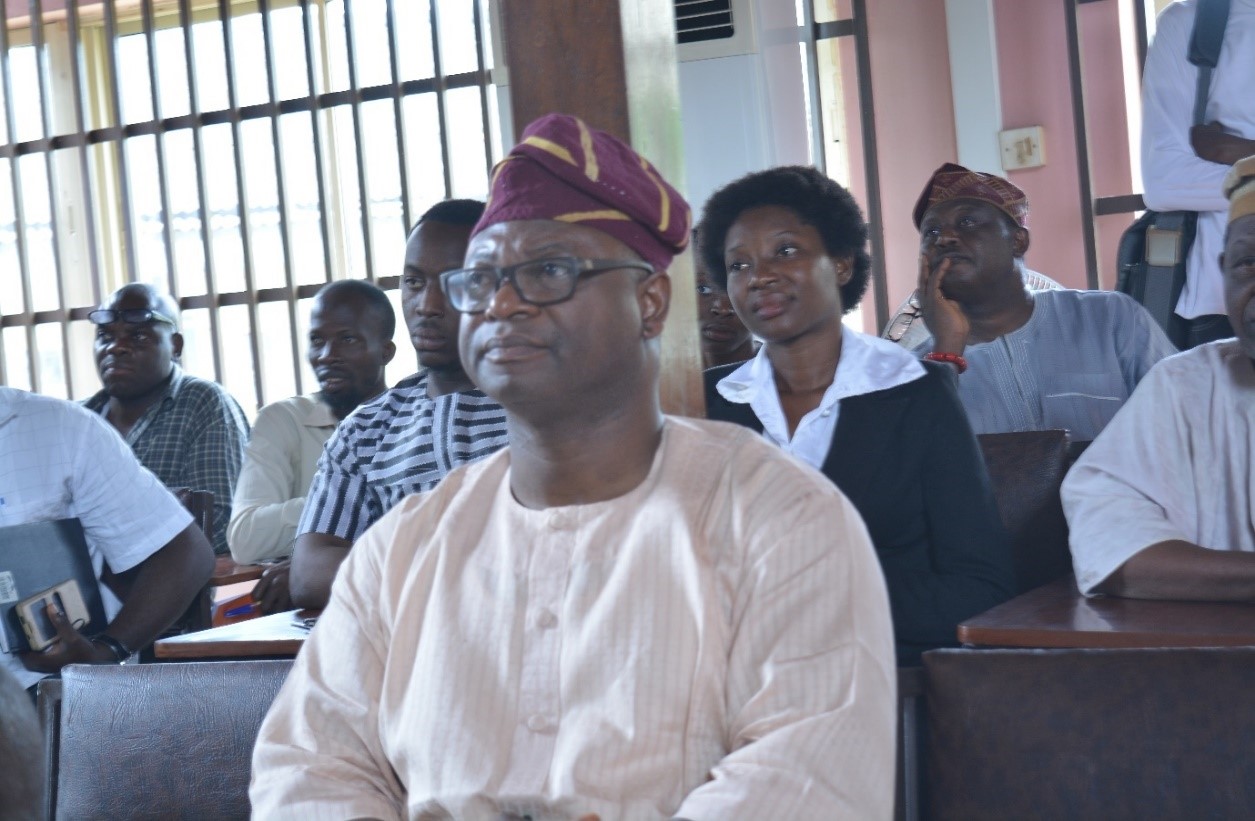
    On July 25, 2018, Fr. Adodo delivered the faculty lecture at the University of Ibadan.  The seminar lecture series is sponsored by the council for the Development of Social Science Research (CODESRIA). The seminar, which held at Lady Bank Anthony Hall, at the Institute of African Studies, University of Ibadan, was attended by an unprecedented crowd comprising students, university professors, Researchers, government officials, Politicians, and celebrities. Chairman of the occasion, Prof. David Okpako, retired prof of Pharmacology at the University of Ibadan, set the scene by emphasising the importance of studying Africa with African eyes; that is, Africans tackling issues of culture, race, economics, and development from their own perspective and based on their own worldview.  The in-coming Director of the institute, Dr. Jimoh Olaoluwa, expressed his delight at the high turn-out of participants and the interest which Transformation Studies have generated in the University.

    In the lecture, which was titled: ‘Transformation Studies in Africa. Researching Africa with African Eyes’, Fr. Adodo went straight to the point. According to him: ‘The first part of African liberation story was the ‘successful’ struggle for political independence from the colonial powers. The second part was the era of independence when power ‘successfully’ shifted to the African Nationalists. This paper argues that the third part towards African emancipation is for the common people of Africa to free themselves from their leaders. African leaders, from Zimbabwe to Uganda, Cameroon, Liberia, Burundi, Togo, Nigeria, Ivory Coast, Senegal to the Benin Republic, Kenya and the Democratic Republic of Congo, to mention a few, have obviously betrayed the trust of their people They have succeeded in amassing state wealth into their own private pockets and lacked the will, skill, and sincerity to govern and transform their countries. It is therefore evident that Africans should not expect much from their leaders and must now learn to free themselves from the greed of their leaders. Civil wars or violent protests, as we saw in the so-called Tunisian and Egyptian uprising, cannot make this happen. This paper posits that a more systematic approach, that evolves from the ground up, naturally and culturally, technologically and economically, within a functional polity, is the most efficient and sustainable way to transform Africa. The theory and practice of such an approach is the basis of the new curriculum on Transformation studies in Africa (TSA).’ 

    Fr. Adodo, Dr. Omolulo Olunloyo, Former Governor of Oyo State, and Prof. Joseph Okogun, now a visiting Professor
    Fr. Adodo, Dr. Omolulo Olunloyo, Former Governor of Oyo State, and Prof. Joseph Okogun, now a visiting Professor in the USA,

    Quoting an African Proverb which says that, ‘Until the Lion learns to write, every story will glorify the hunter’ and also Chinua Achebe’s words: ‘If you don’t like someone’s story, write your own’, Fr. Adodo passionately argues that Africans need to stop blaming the foreign powers for their woes, but rather, face their problems with courage and determination, and learn to tell their own story in their own words, metaphor, and Language. According to him: ‘Many African nations are yet to upgrade, renew and evolve their knowledge bases. They find a lazy and easy excuse in referring to times past, the ‘good old days,’ to ancient ways of life that are not compatible with modern realities. Others blame Colonialism, Capitalism, Civilisation or Modernity. It is true that we were once enslaved; it is true that some capitalist foreigners invaded our land and ruled over us and exploited our natural resources for selfish gains. But were we the only race that was so colonised? And how long shall we continue to blame other people for our woes? Is it not time we courageously face our problems and see them as challenges for growth? When a man in faraway Spain says something derogatory about a black man, we all rightly stand up in protest against his racist tendencies. But why wouldn’t we also wage war against the tribalist in each of us, among our own kin?’

    Oyewole Oyewumi, Oyo state commissioner for Agriculture, Natural resources and Rural Development
    Oyewole Oyewumi, Oyo state commissioner for Agriculture, Natural resources and Rural Development

    Fr. Adodo re-emphasised the fact that for Africans, economic and social freedom are not enough.  The most important freedom, according to him, is cognitive freedom. In his own word: ‘People cannot be liberated by consciousness and knowledge other than their own. It is therefore essential that Africans develop their own indigenous consciousness-raising and knowledge generation, and this requires the social power to assert this. It is not enough to engage in education, the structure of the knowledge itself has to be examined and questioned. It is not enough to study scientific truths, how science arrived at such ‘truths’ has to be challenged. Science does not exist independently of its cultural context, despite its pretence to undiluted objectivity. While education can bring liberation, it can also be a means of keeping people in bondage.

    In conclusion, Fr. Adodo said that: ‘We need the cognitive freedom to help us resist the danger of being ‘storyotyped’ (origin of the word stereotype) again, as our ancestors were. This is what Transformation studies in Africa is about: researching Africa with African eyes.

    More photos from the event

  • Transformation Studies In Africa: An Historic Beginning

    Transformation Studies In Africa: An Historic Beginning

    On May 10, 2018, the newly designed curriculum titled Transformation Studies in Africa started on a high tone with 12 pioneer masters students and one prospective PhD candidate, at the Institute of African Studies, University of Ibadan. The program, which is a partnership between Ofure (Pax) Centre for integral research and Development, The University of Ibadan and Trans4m Centre for Integral Development, is the first of its kind in Africa.

    During a prolonged academic interaction with the faculty staff, Fr. Anselm Adodo, explained that Transformation studies are an evolution of African studies, which grew under the tutelage of colonial scholarship. African studies originated from Europe and were designed as Western scholars studying African people and culture from the western point of view. Most often, such studies were coloured by the prejudices and biases of the foreigners. With transformation studies, Africans can study Africa with African eyes and in their own language and metaphors.

    Transformation Studies in Africa, code-named TSA, aims to ‘release the GENE-IUS’ of Africa. It aims to study African issues, African realities, African problems from the African point of view, and provide African solutions to African problems. TSA, according to Adodo, is Africa writing her history based on her own experience, in line with the African proverb, ‘until the Lion learns to write, every story will glorify the hunter’.

    Director of the Institute of African Studies, Dr Ohioma Pogoson, expressed his delight at the successful take-off of the program. The number of the successful candidates, according to him, is a good indication that TSA might well turn out to be the most successful and crowd-pulling program offered at the institute. The immediate past director of the Institute, Prof. Dele Layiwola, observed that it is unusual for a brand-new program as TSA to have such a high number of candidates. He also announced that the program would begin admission of PhD students in 2019, another milestone for such a new program. In fact, a PhD candidate has already applied and has opted to wait patiently till 2019 to join the program rather than
    enrol for another course.

    Fr. Adodo thanked all those who were involved in the curriculum development process and planning stages: Prof. Layiwola who was then the director of the Institute, Dr. Femi Jegede, who worked tirelessly to ensure that the program passed through the various screening stages at the University of Ibadan, and Dr. Pogoson who gave his support to the program as the new director. He also thanked Professors Lessem and Schieffer of Trans4m centre for Integral Development for their interest in Africa. Both Lessem and Schieffer were actively involved in the development of the curriculum and even visited, along with Fr. Anselm Adodo, the Vice Chancellor of the University in 2016.

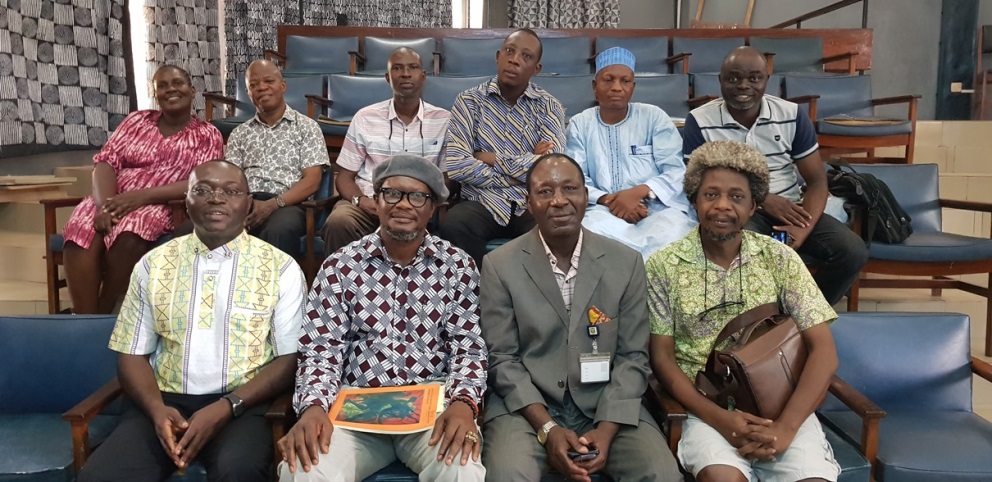
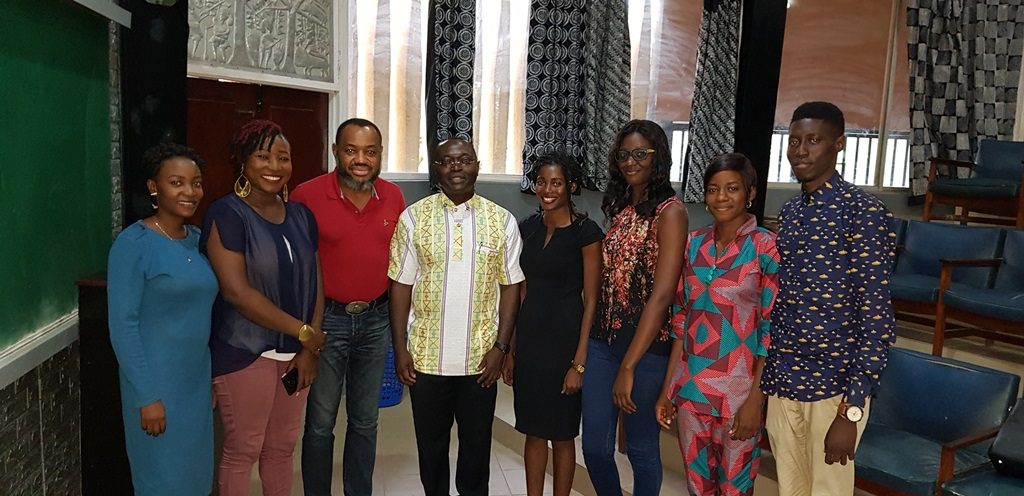
    Fr. Anselm Adodo with the director and faculty staff of the Institute.
    Fr. Anselm Adodo with the director and faculty staff of the Institute.

    During interaction with the students, Fr. Adodo congratulated the new postgraduate students and
    informed them that joining the TSA program might well be one of the most significant decisions of their lives. TSA, according to him, is radically different from other courses at the university, as it is reform-oriented, and aims to encourage students to think and act differently. The students expressed their delight at being selected to join the program. They said they entered the program because they want to become agents of Transformation in their communities, society, the country and the world and that the term, ‘Transformation’, struck a chord in their hearts. As a further sign of interest and attention which the program has generated, Fr. Adodo has been invited by the Institute to present a paper on African
    Transformation at the prestigious Faculty seminar of the University in July 2018.

    Fr. Adodo with some of the pioneer post-graduate students
    Fr. Adodo with some of the pioneer post-graduate students

  • Reforming Education In NIGERIA: Thinking Outside the Box

    Reforming Education In NIGERIA: Thinking Outside the Box

    Have you heard our young men discussing football recently? They know all the latest news on the English Premier League. They can tell you when Manchester United is playing Chelsea, and can even predict who will win and by how many goals. Thanks to cable, internet and satellite TV, our young people also know how many soldiers are killed in war zones daily, how many suicide bombings take place and how many people are kidnapped by militants. They know which countries have the most relaxed immigration rules. But ask them about the health benefits of banana, or how bush burning affects soil productivity, or what a balanced diet is, and you will be surprised at their level of ignorance.

    Young Nigerians are readily acquiring information about other lands, while rapidly losing knowledge of their own land, their environment, their culture and their people. This is a problem because no nation can truly develop until it has a deposit of local knowledge which it preserves and nurtures. True and lasting development is not imported from other countries – it is home-grown. The art of development is the ability to convert and exploit local knowledge to create relevant, sustainable and affordable technology. The best solutions to a  nation’s problems are those which come from within. But because this isn’t recognised, indigenous knowledge is not properly valued – and is being lost at an alarming rate.

    In many indigenous societies, when a knowledge-bearer dies, his knowledge dies with him. With every old person who dies in our villages, the equivalent of a library is lost. Today, we speak of protecting the environment and our rare species of plants and animals. But equally important is the need for national and international efforts to protect and preserve indigenous knowledge.

    At the national level, our country’s education system has a vital role to play in ensuring that indigenous knowledge is shared, preserved and used for our country’s development. But today, education in Nigeria is too preoccupied with other interests and goals. Most students in Nigeria are brainwashed to think that the reason they go to school is simply to acquire paper certificates in order to get a career. Our society prides acquisition of degrees over holistic and integral personal development. What a misconception! It is no wonder that our education system in Nigeria is so examination-oriented. Even infants in kindergarten are expected to sit and ‘pass’ exams.

    The goal of education should not be just mastery of subject matter, but mastery of one’s person. The goal of education should not be to stuff facts, techniques, methods and information into students’ minds, but rather to teach them how to use ideas and knowledge to develop their own personhood. Yet today, rather than seeing education as a means of personal development, most students see it as a step towards a career, as something that will launch them into a so-called ‘successful’ life. Proper education should help students to find a decent calling or vocation, not just a career. A career is a job, a way to earn one’s daily bread. A
    calling is about life, personhood, values, and one’s vocation and gift to the world. It comes out of one’s inner convictions. A career can always be found in a calling, but it rarely happens the other way around.

    For centuries, human beings lived under the illusion that with enough knowledge and technology, we could manage and control the Earth. As new factories and industries produced more computers, electronics and machines, we thought we had succeeded in mastering our planet. We thought that a rapid increase in data, words, paper and technical details was equivalent to an increase in knowledge and wisdom. The truth,  however, is that as we grew in technical knowledge – in ‘know-how’ – we lost other kinds of knowledge:
    intelligence, which is characterised by an ability to foresee the consequences of one’s actions; wisdom; and ‘know-why’. Our students graduate from universities with a distorted view of reality, of nature and of the cosmos. Some of these students score highly in their examinations and are then regarded as ‘experts’. They are seen as brilliant and clever. They have the technical know-how, but they cannot ask the deeper questions of life. University education provides students with answers – without them even knowing what the questions are.

    It is worth noting that the people whose work and ideas have led to the destruction of the ecosystem, disturbance of climate stability and depreciation of biological diversity are not ignorant people: indeed, the vast majority of these people have letters after their names. For humanity to survive, we must give up the misleading conception that western culture represents the pinnacle of human achievement. Modern capitalist culture does not nourish that which is best and noblest in the human person. It does not cultivate vision, imagination, a sense of wonder and spiritual sensitivity. It encourages pride instead of humility, violence instead of gentleness, greed instead of generosity, individualism instead of communality, selfishness instead of selflessness, monoculture instead of cultural diversity.

    Is it not strange that there was such a huge uproar when the cut-off for admission to Nigerian universities was recently lowered by the regulatory authority? The general consensus seems to be that passing exams is the only method of ascertaining creativity and intelligence. Such a reaction itself is a reflection of our own narrow understanding of education and excellence.

    University education has three aspects: form, process and content. Form – which is the focus of almost all discussions about university education in Nigeria – refers to a university’s physical structures,  bureaucratic systems, salary and finance systems and organogram.

    Process refers to the relationships between vice chancellors and lecturers, between students and lecturers, and between the university and the host community as well as the society at large. It is a sad fact that many Nigerian students pay their way through universities via kickbacks and bribes, sexual molestation of female students by lecturers is alarmingly common, and there is a clique within the university system that silences those who complain openly. How do you reform education when the process is so dirty?

    The third aspect is content, which refers to the curriculum and the literature used in teaching. A look at the content of Nigeria’s university curricula indicates that colonialism is still very much alive and active, and true independence is still far off.  University education is the most colonised aspect of African life. Each year we churn out graduates who lack knowledge of their history, have no appreciation for their tradition, and who see reality through the prism of western reality. In my view, a decolonisation of our university curricula and literature is the most urgent reform of education that is needed in Nigeria and Africa. I look forward to the days when strikes by university lecturers will not just be about money and finance (form), but also about morality (process) and the quality of the curricula (content).

    It is not enough simply to engage in education. The structure of the education itself has to be examined and challenged. It is not enough to study scientific truths; how science arrived at such ‘truths’ has to be questioned. Science does not exist independently of its cultural context, despite its pretence to undiluted objectivity. While education can bring liberation, it can also be a means of keeping people in bondage.

    And lest we forget, education is no guarantee of decency, prudence or wisdom. Learning in itself will not make us better people. The worth of education must be measured against the standards of decency and human survival. It is, therefore, wrong to think that education in itself will save humanity. Our survival in the next century depends on education, but not education as we have conceived it for over 60 years. We need a new kind of education.

    Anselm Adodo is a Catholic priest and Director of Ofure (Pax) Centre for Integral Research
    and Development and of Paxherbals.

  • History Made as Paxherbals Hosted GEN Conference

    History Made as Paxherbals Hosted GEN Conference

    Nigeria recently made history as it hosted the 2017 conference of the Global Ecovillage Network-Africa (GEN-AFRICA), courtesy of Paxherbal Clinic and Research Laboratories at Ewu, in Edo State, Nigeria, from December 10-17.

    The Conference brought together 20 participants from 17 different countries in Africa, Europe and a representative from the United Nations. The conference aimed to foster exchange of ideas among participants on how best to create sustainable development and environment friendly lifestyles in the key dimensions of human engagement:  Ecology, Culture, Economy and the Social, which also includes the Spiritual.

    The Global Ecovillage Network envisions a world of empowered citizens and communities, designing and implementing their own pathways to a sustainable future, and building bridges of hope and international solidarity. As a solution-based, multi-stakeholder alliance, GEN provides information, tools, examples and global representation to the expanding network of those dedicated to developing and demonstrating sustainability principles and practices in their lifestyles and communities around the world.

    At the beginning of the conference, the International President of Global Ecovillage Network (GEN), Kosha Joubert from Scotland, affirms the core vision of GEN, which is to build a world that is regenerating rather than depleting the environment, and where cooperation and connection is rewarded.

    Global Ecovillage Network in Africa, nicknamed GEN-AFRICA, works with communities all over Africa, especially those communities who want to regenerate their natural environments, preserve cultural heritage, increase social resilience, improve livelihoods and become powerful models of change. Through projects such as the Ecovillage Development Programme, GEN-AFRICA assists local residents and community-owned development activities with transformative, regional or nationwide change.

    During the intensive one-week conference, participants discussed about climate change, poverty, food security, organic farming, eco-friendly water solution systems and other innovations. The good news, it was affirmed, is that even though we face many challenges in the world of today, there are solutions and people willing to implement them! The outlook of the conference, the participants affirmed, was not pessimism and gloom, but optimism and joy, an affirmation that human creativity and capacity for innovation are endless.

    The aims and objectives of the Global Ecovillage network also include the following:

    • To advance the education of individuals from all walks of life by sharing the experience and best practices gained from the networks of ecovillages and sustainable communities worldwide.
    • To advance human rights, conflict resolution, and reconciliation by empowering local communities to interact globally, while promoting a culture of mutual acceptance and respect, effective communications, and cross-cultural outreach.
    • To advance environmental protection globally by serving as a think tank, incubator, international partner organization, and catalyst for projects that expedite the shift to sustainable and resilient lifestyles.
    • To advance citizen and community participation in local decision-making, influencing policy-makers, and educating the public, to accelerate the transition to sustainable living.

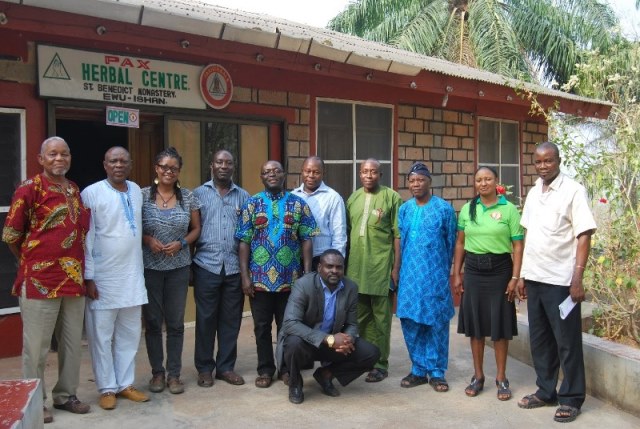
    Some of the highlights of the conference include a facility tour of Paxherbal Clinic and research Laboratories in Ewu, Edo State, which hosted the conference.  After a tour of paxherbals, Participants expressed their delight and admiration for the high level of innovation, organization and scientific research taking place at the Centre, and they encouraged the management of Paxherbal not to relent in their efforts to bring health closer to the people.

    The second highlight was the visit to Ewu village in Esan central local government of Edo state. Ewu Kingdom is made up of seven villages, with a population comprising Christian, Muslim and traditional religion practitioners in a balanced proportion. Participants did not fail to notice one unique attribute of Ewu: how the communities live together in peace despite differences in religion. The meeting with the local community took place in front of the palace of the king of Ewu. During their interactions with the visitors, the local community expressed their gratitude to Paxherbal and OFIRDI for their community development initiatives which has made visible impact in the community. Such initiatives include the community loan scheme , and the library project .  During the interaction with the local community, it emerged that water remains a major challenge to all the communities in Ewu kingdom. The next steps will involve providing solutions which will be community- led and sustainable.

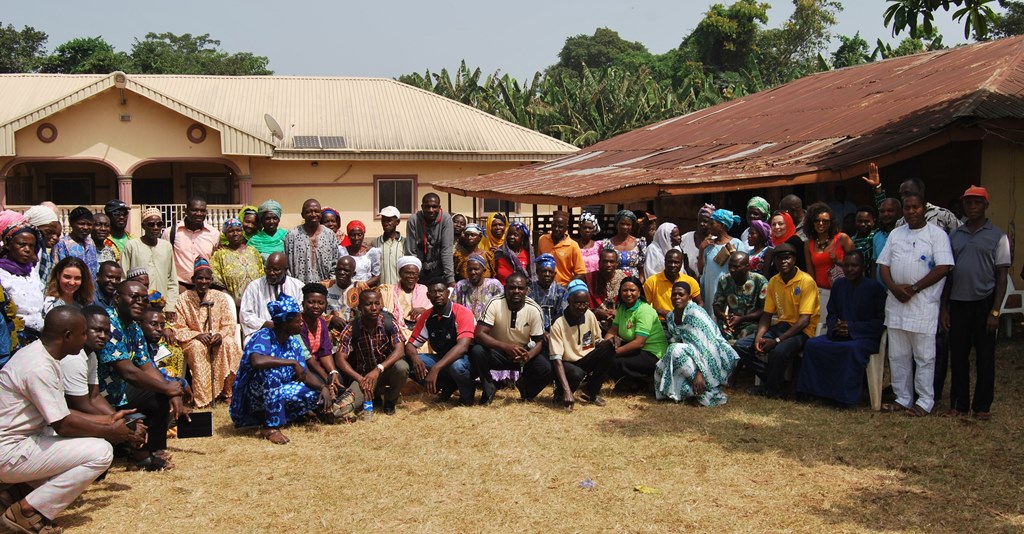
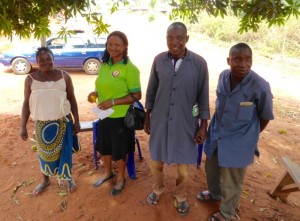
    Ewu community members with GEN-AFRICA conference delegates
    Some Ewu community members with GEN-AFRICA conference delegates

    The third highlight was a courtesy visit to the government house in Benin city to see the governor of Edo State, Godwin Obaseki. The delegation leader Fr. Anselm Adodo of Paxherbals, introduced members of the GEN international team and GEN-AFRICA team to the governor. During their interaction with the governor, the group made power-point presentations showcasing practical examples of their work in community development around the world, from solar solutions, to organic farming, greening of schools, eco-friendly architecture and many others.

    In his response, governor Obaseki thanked the visitors for their admirable work and expressed the willingness of the Edo State government to partner with Paxherbals, which is already a household name in Nigeria, and whose work and activities the governor commended, and also with GEN-AFRICA, so as to tap into their wealth of practical knowledge in community development.

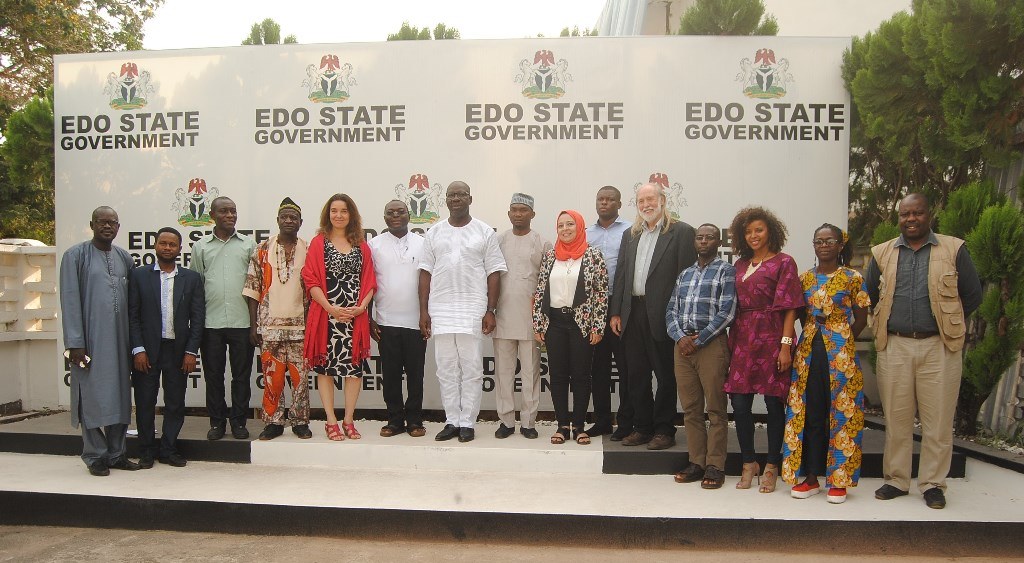
    Gen members with Edo state gov
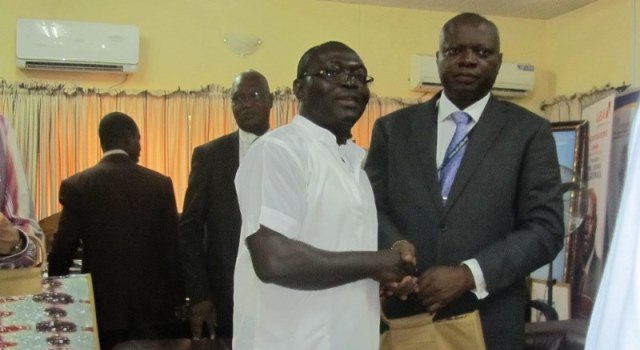
    Governor Obaseki and Fr. Adodo with some members of Global Ecovillage Network in Benin City

  • Report: Conference on Traditional Indigenous Knowledge

    Report: Conference on Traditional Indigenous Knowledge

    Download Full Event Report

    International Conference on Indigenous Traditional Knowledge organized by PAX Herbals Clinic and Research Laboratories, in collaboration with Federal Institute of Industrial Research, Oshodi (FIIRO); the Nigeria Natural Medicine Development Agency (NNMDA), Institute of African Studies, University of Ibadan, Ofure (Pax) Integral Research and Development Initiative (OFIRDI) and National Office for Technology Acquisition and Promotion (NOTAP).

    The Theme of the Conference was “The Contribution of Indigenous Knowledge in Stimulating Integral Development in Nigeria and Africa”. The conference was held at the Federal Institute of Industrial Research Oshodi, Lagos, on the Thursday 5th and Friday 6th of October, 2017 Participants at the Conference were drawn from the Academia, Research Institutes, Government Agencies from Federal, State and Local Government, Small and Medium Scale Entrepreneurs from value chain system of the, Traditional Medicine Practitioners (TMPs), Traditional Birth
    attendants, Non-Governmental Organizations (NGOs) and the Media.

    Photos from Event

    [Best_Wordpress_Gallery id=”5″ gal_title=”Traditional Indigenous Knowledge”]

  • Knowledge Creation in an African Village

    Knowledge Creation in an African Village

    Storytelling as a tool for transformation

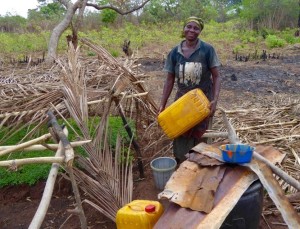
    In April this year, we had a meeting with the local farmers, about sixty of them. It was part of our participatory action research strategy, getting the people to identify, discuss and analyse their challenges and then proffer solutions from within.  The local people complained that cassava farming is no longer profitable. Many families cultivate cassava, which they harvest, eat and then sell the leftovers. This is subsistence farming. They spend so much time and energy in the sun clearing the bush, planting and then waiting for the cassava to grow and mature. At the end of the day, they are able to harvest a few bags of cassava, which is priced very cheaply in the local market. To give a higher yield of cassava, the government shares thousands of fertilisers that they claim help to improve soil yield. But the people know the fertilisers don’t provide the solution, and only deplete the soil. They know organic farming is best.

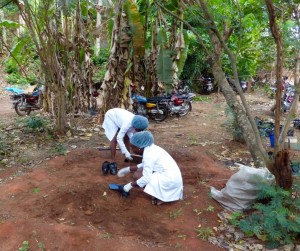
    First training session on mushroom growing

    At this meeting, the group agreed to invite the most elderly women in the communities to the next meeting. These grandmothers and great-grandmothers are custodians of knowledge in the local communities. The oldest among them was an energetic slim old mama, who is 120 years old, while the others were between the ages of 75 to 110. As a student I had read in the books that life expectancy in Africa is low, 40% in some countries, 55% in others. The main reason, of course, was said to be poverty, meaning, in this case, a lack of money. The reality is there are many septuagenarians, octogenarians, nonagenarians and centenarians, many of them still active and alert. This misunderstanding of life expectancy is one tragedy of research and the researched. The researcher tells the story from his or her own point of view to suit a certain stereotype.

    Sharing from the calabash of Knowledge

    ‘Once upon a time’, the eldest woman in the community, Mama Ageless, as she is fondly called, said, ‘there were mushrooms growing all over the land, and we used to harvest them to cook. These mushrooms supplied us most of our nutrients. But these days, there are not more mushrooms. Rather, we have bread and fries. Bring back mushrooms to the village’.

    In the next meeting, the group of farmers decided to explore oyster mushroom farming. But all believed that mushrooms only grow in the wild, and no one knew they could be cultivated. As the chief co-researcher, I reached out to my colleagues to inquire about mushroom farming. The way forward is always to blend local indigenous knowledge with exogenous knowledge. The theory of “communitalism” , which I developed in my new book, ‘Integral Community Enterprise in Africa’, is based on the need to forge a synergy between these different modes of knowledge creation, bridging the gap between the old and the new. This is what I refer to as a communiversity rather than a university, a calabash of wisdom where knowledge flows in and out in the community, and into which everybody has something to contribute.

    Mushroom training

    Within two months, I organised a training session on mushroom cultivation to a select group of the local farmers. The two species cultivated were Pleurotus Ostreatus and Pleurotus Pulmonarius.  Many of the selected people did not attend because they did not believe that mushrooms can be cultivated. Those who attended were enthralled, surprised and excited. It was a eureka moment for the participants, and they all exclaimed, ‘So it is possible!’

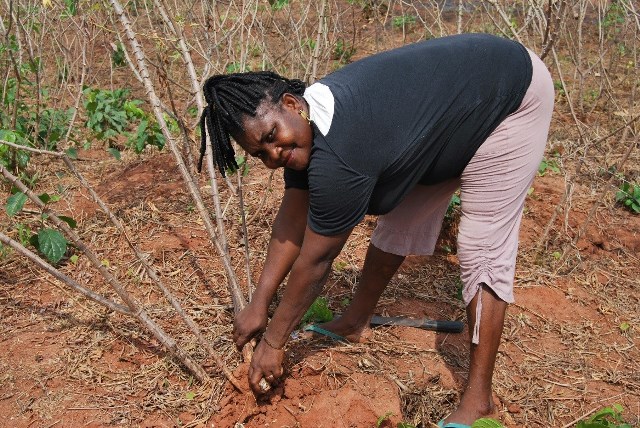
    Since the initial training, hundreds of local farmers have applied to join in the next training. The goal is to move from subsistence farming to secure livelihoods, from food sufficiency to food security, from agriculture to agribusiness. Whereas a 100-foot plot of land can only give a few cassavas worth N35,000, the same plot of land could produce bags of mushrooms worth N150,0000. Unlike cassava cultivation, mushroom is planted inside the house rather than in the open, and the waste from the mushroom soil is far more useful as fertilisers than the synthetic fertilisers provided by the government.


    What I learnt in the village

    I have attended many seminars and workshops where I was taught that people need money in order to eat a balanced diet, and that if you give poor people money, they will eat good food. Armed with such foreign-made academic knowledge, I went to work among the poor men and women in a rural community in Nigeria. And they taught me another set of lessons, more realistic and more down-to earth. Here are some of the lessons:

    1. Do not give the people what they do not ask for: Some foreign NGOs, government officials and development workers often go to communities with ready-made answers to problems they have identified, and then convince the people to accept their solutions. Convincing them to accept your solution is easy. But the solution will not last because it will not be sustained. Unless the people ‘own’ the solution, they will abandon it when you are gone. That is the simple truth.
    2. More money does not translate into better food. We often think that the reason why poor people do not eat well is because they are poor. The reality on the ground is different: It often happens that the richer people get, the poorer their diet becomes. Again, more money does not translate into better food. Most often, the reverse is the case. The most important factor in eating a healthy, balanced diet is not money; it is knowledge –knowledge of the right food, the right food combination and the right time. I have discovered that people need more money to buy and eat the food that will eventually kill them!
    3. People in the local communities know more than they can tell. There is a huge deposit of implicit knowledge in the local communities. This knowledge is a potential asset that can be explored and tapped for the good of the society. Tapping into this requires an approach to education in the original sense of educare, the Latin word from which the English word ‘education’ is derived. Educare means to draw out, to bring out what lies within. We tend to see education as stuffing students with facts and figures and ideas. In this sense, the university becomes a place separated from the community, a sort of laboratory where objective knowledge is generated and stuffed into students. Such an approach to education creates a dichotomy between teaching and research, where the teacher is the one who knows it all, while the student is like an empty pot needing to be filled up with ideas, facts and figures. For this, the student must pay a fee.

    Conclusion

    The acquisition of Western knowledge has been and is still invaluable to all, but, on its own, it has been incapable of responding adequately in the face of massive and intensifying disparities, uncontrolled exploitation of pharmacological and other genetic resources and rapid depletion of the earth’s natural resources. In that context, a return to indigenous knowledge, cast in contemporary guise, is all-important.

    In a divided world as ours, we do not need more billionaires, more consumers and more powerful men. The world is in dire need of more healers, more peacemakers and more storytellers, and this is where the true researcher comes in.


  • New Developments in Clinical Trial of African herbal medicine for Malaria

    New Developments in Clinical Trial of African herbal medicine for Malaria

    The Nigeria Natural Medicine Development Agency (NNMDA) and Pax Herbal Clinic and Research Laboratories (Paxherbals), are into a partnership that will enhance the scientific practice of herbal medicine in Nigeria.  The two parties, through a memorandum of understanding, agreed to collaborate in the establishment of frame work for increased cooperation in clinical trials and public health research collaboration in the areas of Natural products, Natural Medicine, Traditional Medicine Knowledge and Practice, Intellectual Property Rights, Science and Engineering, Agricultural Practices and any other related field of work approved by the Parties’ respective authorities. Similar partnership to advance the cause of natural medicine has been agreed on with the malaria research unit at the University of Port Harcourt, Nigeria.

    Focusing of Malaria

    As a matter of priority, the two parties decided to collaborate in the design of a framework for clinical trial of PAX anti-malarial herbal medicine called Malatreat.  The decision was based on the fact that malaria still constitutes a major health challenge in Africa. It is a shame indeed that despite the fact that Nigeria is blessed with many scientists, researchers and herbal experts, they are yet to develop a standardized herbal medicine for malaria. This is a challenge which NNMDA, the University of Port-Harcourt and PAXHERBAL seek to confront.

    Although herbal medicines offer a wide diversity of medicinal properties and have proven to be a boom for therapies, its clinical evidence mapping is largely lacking and thus cannot be integrated into Nigerian public health structures. Also, there is a high prevalence of malaria in Nigeria, and clinical evidence mapping of herbal anti-malarias might be the innovation to improve malaria control and elimination programs.

    The Malaria Challenge vs. Paxherbal Malatreat

    Malaria is a national challenge in Nigeria requiring urgent intervention. The WHO documents that Nigeria uses herbal medicines in 60% of cases of early febrile diseases perceived to be malaria. Also, in the few systematic herbal medicine clinics across Nigeria and the many treatment homes existing in almost every hamlet, malaria and febrile conditions are the most encountered diseases by Traditional Medicine Practitioners (TMPs).

    The NNMDA and PAXHERBALS decided to draw up a proposal that seeks to evaluate the Pax-herbal anti-malaria (Malatreat) in use at the clinic and research laboratories of paxherbals and its environs, Ewu-Esan in Edo state Nigeria by utilizing a prospective observational study design.

    According to Pharmacist Ogar, a research fellow at NNMDA, and a key designer of the clinical trial proposal, few or no studies have illustrated methods to engage herbal medicine clinics in Africa and perhaps none in Nigeria on ways to describe and evaluate clinical use of herbal medicines as anti-malarial in patients. Observational clinical studies could be carried out to estimate the efficacy and toxicities of herbal anti- malarias in clinical protocols and thus document any adverse effects.  This should provide the needed opportunity to measure patient outcome in malaria patients exposed to the herbal drug in a clinical setting.


    Paxherbal maltreat was first registered by NAFDAC in 2008 as Paxherbal Malsol and has consistently passed regular tests and evaluation. It has a long history of safety and has been evaluation for toxicity, and have been certified safe for human consumption. 12 more Paxherbal products were further approved by NAFDAC in 2010. With over 36 registered herbal products for various diseases such as diabetes, High blood pressure and Arthritis, PaxHerbals has the highest number of NAFDAC approved herbal supplements in Nigeria.

    According to director of Paxherbals, Fr. Anselm Adodo, if herbal practitioners in Nigeria and Africa want to be respected and integrated into the national health care system as healthcare providers, they will need to upgrade their practice through research and innovation. Most often, herbal practitioners do more of boasting and making bogus claims about their products, rather than engage in serious scientific work.

    Paxherbal, ISTH and NNMDA Partnership

    Recently, the Irrua Specialist Teaching hospital in Irrua (ISTH), Edo State, expressed interest in the proposal and have teamed up with PAXHERBAL and NNMDA to carry out this innovative and historic study.  Such initiative is historic and revolutionary, and will be the first of its kind in Nigeria. The involvement of ISTH, a federal government specialist teaching hospital, in the research proposal also shows that conventional medical practitioners in Nigeria are willing to explore herbal medicine provided attention is given to rigorous research. Of course there will always be antagonists to any such partnership, but experience has shown that the future belongs to the people, and organizations, who are open to new possibilities and innovations.

    The three organisations, NNMDA, PAXHERBAL and ISTH are currently working round the clock to acquire all the needed permissions, including ethical clearance, in line with best international practice. The short-term goals of the project are

    • To Evaluate the effect of Pax-herbal anti-malaria (Malatreat) on Plasmodium falciparum 
    • To acquire evidence basis for utilization of the anti-malaria and to acquire necessary preliminary clinical data for the design of wide-scale Randomized Clinical Trial of the herbal therapy.
    • To prospectively review the clinical outcome from treatment of malaria patients with PAX herbal Malatreat and to    quantify   the   degree   of   parasitaemia   reduction   and antigenecity at every level of administration of Paxherbal Malatreat.
    • To determine clearance rate of parasitaemia in the bloodstream of patients’ administered Paxherbal malatreat.
    • To estimate the therapeutic efficacy and clinical safety of Paxherbal malatreat.
    • To acquire necessary clinical data for the design of Randomized Clinical Trial of the herbal therapies.

    In September 2017, Paxherbals forged a new partnership with Nigeria’s foremost medical research institute, the National Institute of Medical research (NIMR), to carry out clinical trials on some of the herbal products produced by Paxherbals, such as the malatreat for malaria, Diatea for Diabetes, Bitter tea for Hypertension and many others. Part of the partnership involves jointly setting up an herbal clinic and research unite at the institute, a very historic and significant move in the nation’s healthcare system.

  • Impact Assesment of EDEMCS Beneficiaries

    Impact Assesment of EDEMCS Beneficiaries

    Recently, some members of EDEMCS executives: Anna Aipokhio, Yinka Olayioye and Photographer Austin Obi visited the beneficiaries of the first phase of the business loan project of EDEMCS for an impact assessment on the farmers. The loan was given in January 2016

    The loan was given in January 2016 to empower the local women. The principles of participatory action research, which form the basis on which EDEMCS was founded, requires that any help given to the rural community should empower them towards sustainability and independence, rather than make them become perennially dependent on Aid. For ACIRD, we believe that aid should make people more independent and innovative, and inspire them to be creative entrepreneurs. In this report, we let the beneficiaries speak for themselves.

    MRS. IDIATA STELLA photo
    Mrs. Idiata Stella (Ehanlen – Ewu); Occupation: Poultry / Farming


    MRS IDIATA STELLA, is a 49 years old widow with five children. She is from Ehanlen community in Ewu kingdom.

    Question: What is your opinion of the loan support scheme?

    Stella: I thank EDEMCS for their loan support scheme. It is a very laudable project and I am happy to be among the first beneficiaries.

    Question: How and why were you selected as a beneficiary?

    Stella: I was nominated by the village elders based on their assessment of me as a serous-minded member of the community. They are aware of my challenges and struggles. They asked me to obtain the application form from EDEMCS, which I did.

    Question: What kind of business do you do?

    Stella: I am into livestock rearing and crop farming. I have been in this business for about five years now. I am into this kind of business because I love taking care of animals. Taking care of animals gives me the opportunity to monitor my farm.

    Question: How has the loan benefited your business?

    Stella: The loan given to me has helped to increase the number of goats from 8 to 25, and I was also able to increase the size of my tomato and cassava farm. Although the money was not enough but I was able to expand my farm and livestock.

    Question: Would you like to apply for more loan?

    Stella: I wish I can have more, I will willingly take if given. My advice to other women is that EDEMCS has come to help the community and the loan is very convenient to pay, especially as there is no interest.

    Mrs. Dauda Zuma Nusa Photo
    Mrs. Dauda Zuma Nusa (Eguare – Ewu); Occupation: Farming

    MRS. DAUDU ZUMA NUSA is from Eguare community in Ewu kingdom. She is a 60 years old Muslim married with five children.

    Question: What is your opinion of the loan support scheme?

    Daudu: I came across EDEMCS during its inauguration. I was selected by my village as one of the beneficiaries. I obtained the loan application form from the village representative, because the process of the loan system is convenient and the source of the funds is genuine.

    Question: What kind of business do you do?

    Daudu: I am into farming. I cultivate plantain and cassava. I am also into trading and the rearing of animals (sheep and goats). I used the loan to hire labourers for the farm, thereby increasing the portion of land I cultivate.

    Question: How has the loan benefited your business?

    Daudu: I am very happy because the loan helped me to expand my farm land from what I used to cultivate before and also expanded my business in agricultural produce.

    Question: What is your advice for other women?

    Daudu: My advice to other women is that the loan is very convenient and the payment conditions are very favourable. They should use the money for the purpose for which it is meant because in the village, integrity is also a capital.

    regina
    Mrs. Regina Aikhuele (Idunwele – Ewu); Occupation: Poultry

    REGINA AIKHUELE, 52, is from Idunwele community of Ewu. She is married with six children.

    Question: What kind of business do you do?

    Regina: I have been a poultry farmer for 25 years. It’s the kind of business I love doing.

    Question: How has the loan benefited your business?

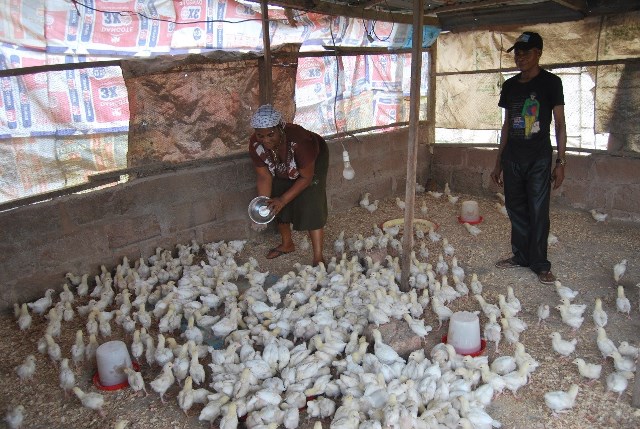
    Regina: I am proud of EDEMCS. I was selected by my village as one of the beneficiaries. EDEMCS is genuine and because of their background, I believed in them. Through the loan given to me I have been able to expand my poultry business. As you can see, these are new set of chickens I have just bought and they are doing very well and there is great improvement in my business. I sold that last set of birds during the Christmas period. The only challenges am having now is that the cost of buying their feed has skyrocketed.

    Question: Would you like to apply for more loan?

    Regina: If another opportunity is given to me I willingly accept.

  • Community Building through Action Research and Innovation

    Community Building through Action Research and Innovation

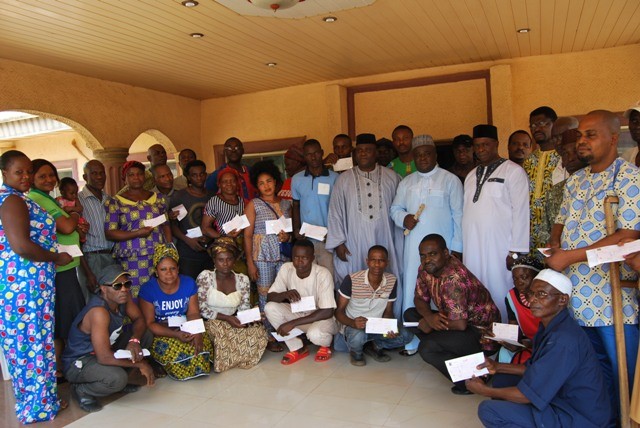
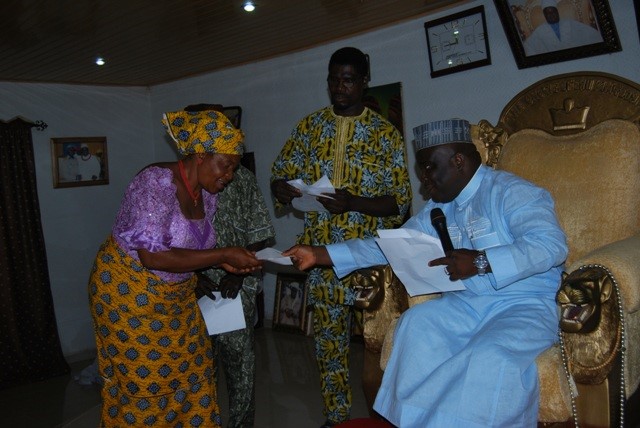
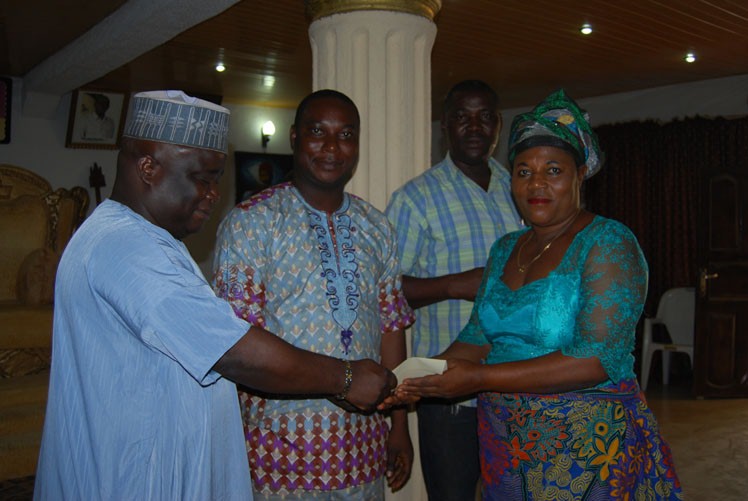
    In February 2016, a group of local women farmers was presented with a cheque of $500 each to support them as they prepare for a new farming season.  The money was presented to each farmer as a loan, which will be paid back within 12 months with zero interest. This is a development project initiated by the local communities themselves.

    The oldest man in her community called the Ukodion, and the king of Ewu, guaranteed each beneficiary. No other collateral is needed except the integrity of each beneficiary. With this option, we adopted a parallel that is unlike the conventional top-bottom, western system of bank-controlled loan giving

    Loan recepients
    The king of Ewu, Abdul Rassaq Ojeifo with EDEMCS executives and the beneficiaries of the $10,000 Dollars benevolent loan

    In December 2016, another group of twenty men, women and youths were presented with a cheque of $500 each. They are all local entrepreneurs with a passion to earning a decent living in a sustainable way while also benefiting the community. They were selected from the different communities in Ewu kingdom. Each loan attracts a mere 2% interest.

    The loan for EDEMCS was made available through a triangular partnership between ACIRD, based in the rural community of Ewu, Edo State, and Sterling Bank, through a special project aimed at empowering local communities and CISER, a Centre for Integral Socio-Economic Research, based in Lagos, Nigeria’s commercial capital.

    Loan recepient photo
    Mrs. Helen, a local business woman, receiving a cheque from the king of Ewu village

    Synopsis

    The Ewu Development and Educational Multipurpose Cooperative Society (EDEMCS) is an initiative of Ofure (Pax) Integral Research and Development Initiative (OFIRDI), a subsidiary of Nigeria’s foremost herbal research institute, the Pax Herbal Clinic and Research laboratories (PAXHERBALS). ACIRD, nicknamed Pax Africana, is an evolution of Paxherbals from an organization, which deals mainly with traditional medicine as an alternative and complementary practice to allopathic medicine, to Pax Africana, a Centre that explores healing beyond biological or physical health to integral healing.

    Center for Integral Social and Economic Research (CISER)

    CISER is made up of a group of young Nigerian bankers who are passionate about evolving a new model of development banking and entrepreneurship built on local culture, worldview and community. Such a model will be well suited to the African context and tradition, rather than merely imitating the western model, using the Ewu community development association, EDEMCS, as a test case. Co-founder of CISER, Basheer Oshodi, believes that the principles of Islamic banking and finance can be adapted to bring about authentic socio-economic development in Africa.

    Loan recepient 2
    Mrs. Stella, a local businesswoman, is one of the twenty beneficiaries

    Through a combination of Participatory Action Research (PAR) and Cooperative Inquiry (CI) research methodologies, a group of researchers at ACRID, led by Fr. Anselm Adodo, employed the tenets of PAR to activate the local community  of Edo State to engage in regular dialogue to identify their challenges, and find a common ground to effectively proffer their own solutions rather than solutions from without. This led to the creation of Ewu Development and Educational Multipurpose Cooperative Society (EDEMCS). From a local group of marginalized and underrated people, EDEMCS is becoming a voice powerful enough to challenge the status quo, and ‘force’ a change in power relations in Edo state and Nigeria.

    ACIRD aims to institutionalize knowledge creation in and for Ewu village in Edo State, Nigeria and Africa as a whole via a new theory called Communitalism, based on the four aspects of Pax: Pax Communis, Pax Spiritus, Pax Scientia and Pax Economia, altogether called Pax Africa. Communitalism, originating from the South, demonstrates that an institutionalized model of business and enterprise based on nature, community, spirituality and humanism, integrally so to speak, is a better driver of social and technological innovation in Africa.

    How ACIRD Is Doing It in EDEMCS

    Rather than ‘doing a project’ for the people, Pax Africana resolved to animate the local community by encouraging the different communities to engage in regular dialogue to identify their challenges and find a common ground to effectively proffer their own solutions rather than solutions from without.

    The distinguishing feature of EDEMCS is that the local community is building on their own traditional systems, structure and worldview in order to create a better world for themselves. This bottom-up approach is a key element of sustainable development. The association cuts across all the villages that make up the Ewu kingdom. EDEMCS aims to identify the key potentials and resources in the local communities so as to develop them in a systematic and strategic way to lead to self-sufficiency, wealth creation and general transformation of the whole community, Edo State and Nigeria at large. The key concepts of EDEMCS are innovation and creativity and the belief that development and wealth can be attained and sustained only when they are grounded in local culture and worldview while open to modern changes.

    EDEMCS’ sphere of influence covers all aspects of the life of the people: agriculture, small business enterprises, skill acquisition, teaching, youth empowerment and business management. Whatever brings development and progress to the community is of special interest to the association. The motto of EDEMCS is ‘United we stand. Divided we fall’

    EDEMCS Membership Overview

    EDEMCS members also comprise many active local women, who are the driving force behind the association. Among them is Esther Otoide, a traditional taxonomist, who is renowned for her ability to identify different species of local herbs and their historical use.

    It is alarming that the local communities in Ewu and all over Nigeria are fast losing knowledge of the local names of medicinal plants as the old men and women have died, while the young people are heading for the cities. Esther works with other women to collaborate with Paxherbal in documenting the local names of medicinal plants and flora in Ewu and Edo State.

    Through monthly meetings, the farmers are gaining new insights into traditional farming techniques and its often hidden potentials.

    Within EDEMCS are three active subgroups.

    • The youth group comprises mainly artisans: mechanics, electricians, carpenters, hairdressers, artists, painters, musicians, drummers, etc.
    • The second group is the entrepreneurs comprising owners of supermarkets, restaurants, drinking joints and market women who sell agricultural products and clothing.
    • The third group is the agricultural group comprising farmers, both male and female. Within the agricultural division of EDEMCS is another subgroup called the Ewu Association of Medicinal Plants Cultivators. They specialize in growing medicinal plants for the Paxherbal factory, a good example of communitalism in action.
  • Redesigned Curriculum Changes how We Learn Herbal Medicine

    Redesigned Curriculum Changes how We Learn Herbal Medicine

    Paxherbals and the Institute of African studies, University of Ibadan, have formed a partnership in transforming the study and teaching of herbal medicine in Nigeria.

    This year, the two bodies redesigned a new Masters and PhD curricula on Traditional African Medicine. The curricula have been approved by the University’s curriculum committee and the Institute will soon begin to admit masters and PhD candidates in Traditional African Medicine.  This is another milestone in herbal medicine development in Nigeria.

    Group photo
    Third from left: Prof. Dele Layiwola, Director of the Institute of African Studies, University of Ibadan, and his team on an official visit to Paxherbal in January 2016

    The outgoing director of the institute, Prof. Dele Layiwola, on his visit to Paxherbal laboratories in Edo state, expressed satisfaction at the high level of research commitment at Paxherbals, and encouraged Paxherbals not to relent in their mission of changing the face of traditional medicine in Nigeria.

    Coordinator of Traditional medicine program at the Institute of African studies, Dr. Jegede, lamented that herbal medicine is a goldmine that has been neglected for too long, and needs urgent attention in Nigeria.

    The Vice chancellor of the University of Ibadan, Prof. Idowu Olayinka, expressed his satisfaction with the research partnership between Paxherbal and the Institute of African studies, and commended the director of Paxherbal. Fr. Anselm Adodo, for his visionary and open minded approach to research and transformative education in Nigeria.

    VC and Adodo
    The vice chancellor, University of Ibadan, presenting a gift to Fr. Adodo after deliberations on research partnership at the university in May 2016.

    During an official visit to the Vice chancellor in May 2016, Fr. Adodo commended the University of Ibadan for their openness to new ideas.   According to him, ‘Higher technical education is increasingly recognized as critical to development, especially with growing awareness of the role of science, technology and innovation in economic growth.  Universities and research institutes are well placed to aid development through their involvement with local business industry and society.

    Universities and institutions in developing countries can aid development by focusing some of their technical training on specific development needs. Nigerian polytechnics were established precisely to meet the needs for technical training in various fields of expertise in order to hasten development. Unfortunately, the craze for university decrees and the prestige of being labelled a ‘university graduate’ often made polytechnic graduates feel inferior and less valued’.

    The director of the institute of African Studies at the university, also commended Fr. Adodo for his central role in the designing of a new post-graduate curriculum called ‘African transformation studies’, which has been approved by the university’s curriculum committee and the post-graduate school. The course aims to equip students with new practical skills in technological and social innovation, so that they can become transformation agents in in their different communities.

  • Learning About and Keeping Record of Plants

    Learning About and Keeping Record of Plants

    Pax herbarium’s mission is to collect every plant – indigenous, naturalized or exotic – that grows in Nigeria. By doing so, we are serving the demand for people interested in traditional medicine, ethnotaxonomy and are preventing any false identification and misuse of plants.

    Nigeria’s vegetation is very rich, from the mangroves in the Delta to the rain and tropical forest and to the savannah, there is a vast diversity of vegetation in Nigeria.

    We make our collections from Natural forest, forest reserves, forest regrowth, farms, savanna and swampy areas of the Nigerian delta.

    The carpological section of our herbarium deals with fruits and seeds. The specimens are preserved wet in preservatives in order to keep their morphology intact.  This section is very useful when it comes to the study of fruiting season, but we go beyond that in order to satisfy human curiosity for the use of fruits/seeds as drugs, food, cosmetics, insecticides and much more.

    The voucher specimen section of the herbarium comprises of dried leaves, fruits, and flowers; pressed and mounted on a sheet of cardboard paper and arranged according to an acceptable system of classification. This section of the herbarium contains phytomedicinal and ecological information of plants.

    We have made over 5000 collections from all over the country with a complete documentation of over 2000 plants in the herbarium card index, belonging to more than 900 species.

    Students Industrial Training

    siwes-students
    IT students cultivating plants

    During the course of the year, the Pax Herbarium admits up to 16 students to undergo industrial training (IT), which is part of the requirements for graduation for every student. As of the time of writing, we have 3 botany students from Kogi State University that are spending six months in the Herbarium, getting basic training in plant cultivation, identification and preservation. More students will come in the upcoming months from different universities from all over the country, ensuring a vast network of future graduates, that might one day become potential employees.

    More students will come in the upcoming months from different universities from all over the country, ensuring a vast network of future graduates, that might one day become potential employees.

    One of their duties while undergoing their training at Pax herbarium, is to prepare a seminar concerning a specific plant that they have studied and cultivated throughout their stay. This ensures a contribution towards the herbarium making the industrial training even more beneficial for both parties.

    Written by Amadeus Stickl and Emmanuel Amodu

  • Towards Reviving Study Culture in the Community

    Towards Reviving Study Culture in the Community

    Recently,  EDEMCS attained the knowledge that there is an abandoned library in Eguare, one of the communities in Ewu. On the invitation of the local community managers, EDEMCS representatives went to inspect it, and we came to the conclusion that there is the potential of rebuilding and revitalizing the said library. We believe that a local library is a necessity for a community to provide the means for education in order to encourage a reading culture amongst the community.

    For many years, an ever-increasing number of young people have been leaving the Ewu community for academic pursuit elsewhere. Families too are leaving and moving to places like cities where they could get better education opportunities for their families.   This leaves a lot of the poor families that can’t afford to leave the community behind. Since poorer families have no place like a library or community center for learning for their children after school hours, the children are frequently made to become child workers. The result is very poorly educated young boys and girls who frequently fail to qualify for university (college) eduction.

    For this reason, EDEMCS has taken up the challenge of calling for needed help in building a modern library with full-featured learning materials which will include books, computers, and internet access. We seek support for this project from readers and organizations that will be able to help. Donations for a new building, books, computers, and modern learnings tools will be needed in order to provide a better learning environment for the community.

    Do contact us if you or any organization you know will be willing to help us provide a better learning environment for children in this community. We want to look back in 10yrs and be able to have engineers, doctors, and other professional created because of your support for this venture.

    Written by Amadeus Stickl and edited by Ojo Anthony

  • Promoting Self Development in Rural Communities

    Promoting Self Development in Rural Communities

    The seasons are changing, the rainy season is here and nature is preparing to sprout and to blossom. The first days of March coincided with the first days of rainfall. Famers are busy with preparations of their farmlands for cultivation.

    A Visit to one of the Local Farmers

    Several weeks have passed since EDEMCS (Ewu Development and Educational Multipurpose Cooperative Society) gave out microfinance loans to the local farmers in the Ewu Community. Collectively we thought that it might be time to visit the women, to see the progress they have made and to hear their stories. Hence, a group of EDEMCS representatives set out to see these seven farmers in their homes and on their farms. Listening to the people is one of the key features of Participatory Action Research, based on the integral research model that forms the theoretical framework of EDEMCS community development approach.

    A couple of birds currently owned by the benefiary
    A couple of birds currently owned by the beneficiary

    A female beneficiary at work
    A female beneficiary at work

    Upon arrival the EDEMCS reps were welcomed in a very hospitable fashion, the women were excited to see and talk to them.


    Crops and Animals Farming Essentials

    The majority of the farmers are planting cassava, yam, tomatoes and peppers. It is now a very intensive time for them. The money from the first grant was mainly used to clear the fields. Since this is done by hand and not with automated machinery, it is a time-consuming and expensive task. This means bigger farmland for planting can be prepared.

    Upon questioning if they would apply for a loan again all of them said yes, however, they proposed to increase the amount of money. This proposal will be taking into consideration for the next round of financing but is also dependent on how the end result will look.

    Some of the women are cultivating poultry – turkey and chicken to be specific. They buy chicks, raise them until they are matured, and then sell them on the market. With the loans, they increased the number of chicks and it remains to be seen if this will be something they can sustain and hence profit from it in the long run.

    One beneficiary (left) with EDEMCS representatives
    One beneficiary (left) with EDEMCS representatives

    A nursery for tomatoes owned by the benefitiary
    A nursery for tomatoes owned by the beneficiary

    The overall experience of seeing the farmers and how excited they are about this development effort was very positive.

    Of course, we are only in our starting phase and not everything is perfect yet, but a solid start has been made and hopefully we will further develop in the future in order to be a sustainable initiative.

    Written by Amadeus Stickl

  • Empowering Local Women Through Microfinancing

    Empowering Local Women Through Microfinancing

    Since the inaugural meeting of EDEMCS (Ewu Development and Educational Multipurpose Co-operative Society) took place more than a year has passed. The organization has mastered many stages ranging from the official registration with Edo State, the cultivation of interest and trust in the village up to the engagement of the community.

    Fortunately, the King of Ewu, Father Anselm Adodo (OSB), the St. Benedict Monastery and Paxherbals enjoy a great amount of respect in the community, making it easier to align the interests of the local individuals. Hence, EDEMCS was able to tackle its first project: empowering local women through micro financing.

    It was agreed that women should be the focus of the first round of financing for various reasons: First and foremost, women in Ewu are more reliable when it comes to paying back loans and secondly it is important to nurture the process of emancipation in the community in order to start the transformation. In that sense, the stage was ready for the first act of financing.

    First Subvention for the Local Farmers

    microfinancing check presentationOn January, the 23rd  2016 on a hot dry-season day the local farmers, those that were selected by the EDEMCS committee, gathered at the palace of the King of Ewu. The purpose of this meeting was one of a positive nature: the first check in the young history of EDEMCS was presented to the local women on that day.
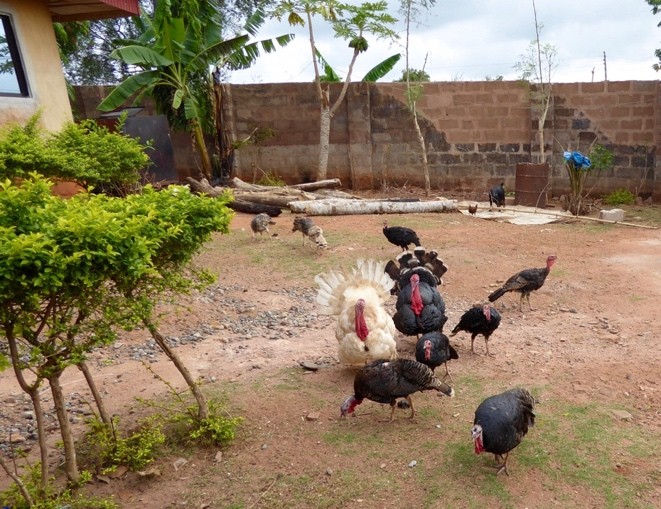
    The money was given out to 7 farmers, each representing one of the seven communities which compose the Ewu-Kingdom and each check was worth N50,000. An agreement was reached, that there should be two payments over the course of 12 months with an interest rate of 10%, culminating in N55,000. The 10% interest rate is unheard of in Nigeria since normal interest rates for micro financing banks start from 15% and go up to 25%.

    The local farmers are accompanied by EDEMCS throughout the whole process of cultivation. They are tutored in traditional farming techniques to ensure the survival and spread of indigenous knowledge. Frequent consultations by EDEMCS ensure that this first batch of financing is a successful one and only one of many more to come.

    The Next Step

    While the women are cultivating their first crops with the help of EDEMCS, the next round of financing is being negotiated with Sterling Bank, so that many other farmers can benefit in the foreseeable future.

    written by: Amadeus Stickl