Tag: learning

  • Transformation Studies In Africa: An Historic Beginning

    Transformation Studies In Africa: An Historic Beginning

    On May 10, 2018, the newly designed curriculum titled Transformation Studies in Africa started on a high tone with 12 pioneer masters students and one prospective PhD candidate, at the Institute of African Studies, University of Ibadan. The program, which is a partnership between Ofure (Pax) Centre for integral research and Development, The University of Ibadan and Trans4m Centre for Integral Development, is the first of its kind in Africa.

    During a prolonged academic interaction with the faculty staff, Fr. Anselm Adodo, explained that Transformation studies are an evolution of African studies, which grew under the tutelage of colonial scholarship. African studies originated from Europe and were designed as Western scholars studying African people and culture from the western point of view. Most often, such studies were coloured by the prejudices and biases of the foreigners. With transformation studies, Africans can study Africa with African eyes and in their own language and metaphors.

    Transformation Studies in Africa, code-named TSA, aims to ‘release the GENE-IUS’ of Africa. It aims to study African issues, African realities, African problems from the African point of view, and provide African solutions to African problems. TSA, according to Adodo, is Africa writing her history based on her own experience, in line with the African proverb, ‘until the Lion learns to write, every story will glorify the hunter’.

    Director of the Institute of African Studies, Dr Ohioma Pogoson, expressed his delight at the successful take-off of the program. The number of the successful candidates, according to him, is a good indication that TSA might well turn out to be the most successful and crowd-pulling program offered at the institute. The immediate past director of the Institute, Prof. Dele Layiwola, observed that it is unusual for a brand-new program as TSA to have such a high number of candidates. He also announced that the program would begin admission of PhD students in 2019, another milestone for such a new program. In fact, a PhD candidate has already applied and has opted to wait patiently till 2019 to join the program rather than
    enrol for another course.

    Fr. Adodo thanked all those who were involved in the curriculum development process and planning stages: Prof. Layiwola who was then the director of the Institute, Dr. Femi Jegede, who worked tirelessly to ensure that the program passed through the various screening stages at the University of Ibadan, and Dr. Pogoson who gave his support to the program as the new director. He also thanked Professors Lessem and Schieffer of Trans4m centre for Integral Development for their interest in Africa. Both Lessem and Schieffer were actively involved in the development of the curriculum and even visited, along with Fr. Anselm Adodo, the Vice Chancellor of the University in 2016.

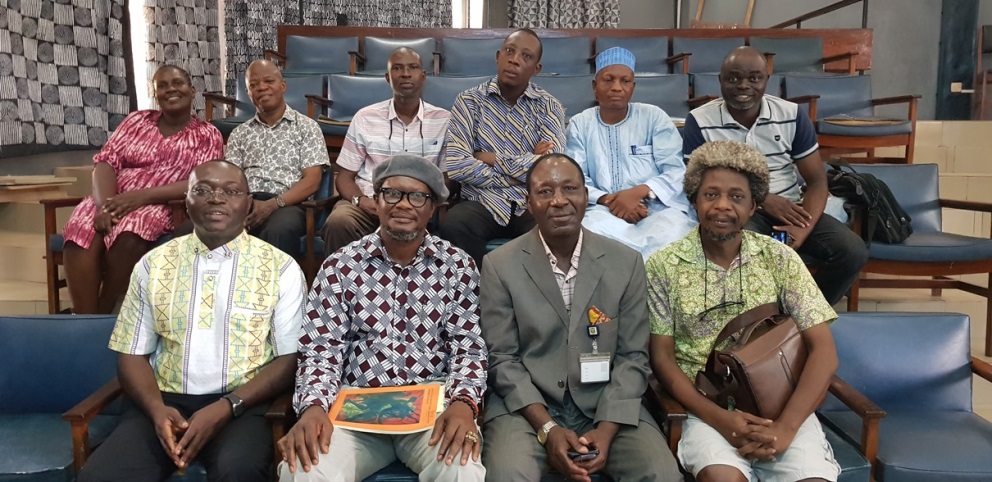
    Fr. Anselm Adodo with the director and faculty staff of the Institute.
    Fr. Anselm Adodo with the director and faculty staff of the Institute.

    During interaction with the students, Fr. Adodo congratulated the new postgraduate students and
    informed them that joining the TSA program might well be one of the most significant decisions of their lives. TSA, according to him, is radically different from other courses at the university, as it is reform-oriented, and aims to encourage students to think and act differently. The students expressed their delight at being selected to join the program. They said they entered the program because they want to become agents of Transformation in their communities, society, the country and the world and that the term, ‘Transformation’, struck a chord in their hearts. As a further sign of interest and attention which the program has generated, Fr. Adodo has been invited by the Institute to present a paper on African
    Transformation at the prestigious Faculty seminar of the University in July 2018.

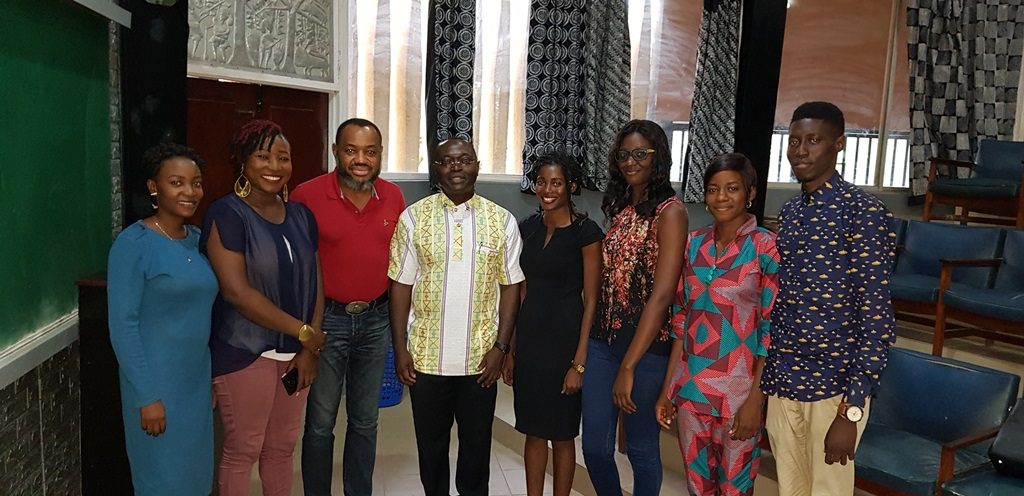
    Fr. Adodo with some of the pioneer post-graduate students
    Fr. Adodo with some of the pioneer post-graduate students
  • Reforming Education In NIGERIA: Thinking Outside the Box

    Reforming Education In NIGERIA: Thinking Outside the Box

    Have you heard our young men discussing football recently? They know all the latest news on the English Premier League. They can tell you when Manchester United is playing Chelsea, and can even predict who will win and by how many goals. Thanks to cable, internet and satellite TV, our young people also know how many soldiers are killed in war zones daily, how many suicide bombings take place and how many people are kidnapped by militants. They know which countries have the most relaxed immigration rules. But ask them about the health benefits of banana, or how bush burning affects soil productivity, or what a balanced diet is, and you will be surprised at their level of ignorance.

    Young Nigerians are readily acquiring information about other lands, while rapidly losing knowledge of their own land, their environment, their culture and their people. This is a problem because no nation can truly develop until it has a deposit of local knowledge which it preserves and nurtures. True and lasting development is not imported from other countries – it is home-grown. The art of development is the ability to convert and exploit local knowledge to create relevant, sustainable and affordable technology. The best solutions to a  nation’s problems are those which come from within. But because this isn’t recognised, indigenous knowledge is not properly valued – and is being lost at an alarming rate.

    In many indigenous societies, when a knowledge-bearer dies, his knowledge dies with him. With every old person who dies in our villages, the equivalent of a library is lost. Today, we speak of protecting the environment and our rare species of plants and animals. But equally important is the need for national and international efforts to protect and preserve indigenous knowledge.

    At the national level, our country’s education system has a vital role to play in ensuring that indigenous knowledge is shared, preserved and used for our country’s development. But today, education in Nigeria is too preoccupied with other interests and goals. Most students in Nigeria are brainwashed to think that the reason they go to school is simply to acquire paper certificates in order to get a career. Our society prides acquisition of degrees over holistic and integral personal development. What a misconception! It is no wonder that our education system in Nigeria is so examination-oriented. Even infants in kindergarten are expected to sit and ‘pass’ exams.

    The goal of education should not be just mastery of subject matter, but mastery of one’s person. The goal of education should not be to stuff facts, techniques, methods and information into students’ minds, but rather to teach them how to use ideas and knowledge to develop their own personhood. Yet today, rather than seeing education as a means of personal development, most students see it as a step towards a career, as something that will launch them into a so-called ‘successful’ life. Proper education should help students to find a decent calling or vocation, not just a career. A career is a job, a way to earn one’s daily bread. A
    calling is about life, personhood, values, and one’s vocation and gift to the world. It comes out of one’s inner convictions. A career can always be found in a calling, but it rarely happens the other way around.

    For centuries, human beings lived under the illusion that with enough knowledge and technology, we could manage and control the Earth. As new factories and industries produced more computers, electronics and machines, we thought we had succeeded in mastering our planet. We thought that a rapid increase in data, words, paper and technical details was equivalent to an increase in knowledge and wisdom. The truth,  however, is that as we grew in technical knowledge – in ‘know-how’ – we lost other kinds of knowledge:
    intelligence, which is characterised by an ability to foresee the consequences of one’s actions; wisdom; and ‘know-why’. Our students graduate from universities with a distorted view of reality, of nature and of the cosmos. Some of these students score highly in their examinations and are then regarded as ‘experts’. They are seen as brilliant and clever. They have the technical know-how, but they cannot ask the deeper questions of life. University education provides students with answers – without them even knowing what the questions are.

    It is worth noting that the people whose work and ideas have led to the destruction of the ecosystem, disturbance of climate stability and depreciation of biological diversity are not ignorant people: indeed, the vast majority of these people have letters after their names. For humanity to survive, we must give up the misleading conception that western culture represents the pinnacle of human achievement. Modern capitalist culture does not nourish that which is best and noblest in the human person. It does not cultivate vision, imagination, a sense of wonder and spiritual sensitivity. It encourages pride instead of humility, violence instead of gentleness, greed instead of generosity, individualism instead of communality, selfishness instead of selflessness, monoculture instead of cultural diversity.

    Is it not strange that there was such a huge uproar when the cut-off for admission to Nigerian universities was recently lowered by the regulatory authority? The general consensus seems to be that passing exams is the only method of ascertaining creativity and intelligence. Such a reaction itself is a reflection of our own narrow understanding of education and excellence.

    University education has three aspects: form, process and content. Form – which is the focus of almost all discussions about university education in Nigeria – refers to a university’s physical structures,  bureaucratic systems, salary and finance systems and organogram.

    Process refers to the relationships between vice chancellors and lecturers, between students and lecturers, and between the university and the host community as well as the society at large. It is a sad fact that many Nigerian students pay their way through universities via kickbacks and bribes, sexual molestation of female students by lecturers is alarmingly common, and there is a clique within the university system that silences those who complain openly. How do you reform education when the process is so dirty?

    The third aspect is content, which refers to the curriculum and the literature used in teaching. A look at the content of Nigeria’s university curricula indicates that colonialism is still very much alive and active, and true independence is still far off.  University education is the most colonised aspect of African life. Each year we churn out graduates who lack knowledge of their history, have no appreciation for their tradition, and who see reality through the prism of western reality. In my view, a decolonisation of our university curricula and literature is the most urgent reform of education that is needed in Nigeria and Africa. I look forward to the days when strikes by university lecturers will not just be about money and finance (form), but also about morality (process) and the quality of the curricula (content).

    It is not enough simply to engage in education. The structure of the education itself has to be examined and challenged. It is not enough to study scientific truths; how science arrived at such ‘truths’ has to be questioned. Science does not exist independently of its cultural context, despite its pretence to undiluted objectivity. While education can bring liberation, it can also be a means of keeping people in bondage.

    And lest we forget, education is no guarantee of decency, prudence or wisdom. Learning in itself will not make us better people. The worth of education must be measured against the standards of decency and human survival. It is, therefore, wrong to think that education in itself will save humanity. Our survival in the next century depends on education, but not education as we have conceived it for over 60 years. We need a new kind of education.

    Anselm Adodo is a Catholic priest and Director of Ofure (Pax) Centre for Integral Research
    and Development and of Paxherbals.

  • Learning About and Keeping Record of Plants

    Learning About and Keeping Record of Plants

    Pax herbarium’s mission is to collect every plant – indigenous, naturalized or exotic – that grows in Nigeria. By doing so, we are serving the demand for people interested in traditional medicine, ethnotaxonomy and are preventing any false identification and misuse of plants.

    Nigeria’s vegetation is very rich, from the mangroves in the Delta to the rain and tropical forest and to the savannah, there is a vast diversity of vegetation in Nigeria.

    We make our collections from Natural forest, forest reserves, forest regrowth, farms, savanna and swampy areas of the Nigerian delta.

    The carpological section of our herbarium deals with fruits and seeds. The specimens are preserved wet in preservatives in order to keep their morphology intact.  This section is very useful when it comes to the study of fruiting season, but we go beyond that in order to satisfy human curiosity for the use of fruits/seeds as drugs, food, cosmetics, insecticides and much more.

    The voucher specimen section of the herbarium comprises of dried leaves, fruits, and flowers; pressed and mounted on a sheet of cardboard paper and arranged according to an acceptable system of classification. This section of the herbarium contains phytomedicinal and ecological information of plants.

    We have made over 5000 collections from all over the country with a complete documentation of over 2000 plants in the herbarium card index, belonging to more than 900 species.

    Students Industrial Training

    siwes-students
    IT students cultivating plants

    During the course of the year, the Pax Herbarium admits up to 16 students to undergo industrial training (IT), which is part of the requirements for graduation for every student. As of the time of writing, we have 3 botany students from Kogi State University that are spending six months in the Herbarium, getting basic training in plant cultivation, identification and preservation. More students will come in the upcoming months from different universities from all over the country, ensuring a vast network of future graduates, that might one day become potential employees.

    More students will come in the upcoming months from different universities from all over the country, ensuring a vast network of future graduates, that might one day become potential employees.

    One of their duties while undergoing their training at Pax herbarium, is to prepare a seminar concerning a specific plant that they have studied and cultivated throughout their stay. This ensures a contribution towards the herbarium making the industrial training even more beneficial for both parties.

    Written by Amadeus Stickl and Emmanuel Amodu

  • Towards Reviving Study Culture in the Community

    Towards Reviving Study Culture in the Community

    Recently,  EDEMCS attained the knowledge that there is an abandoned library in Eguare, one of the communities in Ewu. On the invitation of the local community managers, EDEMCS representatives went to inspect it, and we came to the conclusion that there is the potential of rebuilding and revitalizing the said library. We believe that a local library is a necessity for a community to provide the means for education in order to encourage a reading culture amongst the community.

    For many years, an ever-increasing number of young people have been leaving the Ewu community for academic pursuit elsewhere. Families too are leaving and moving to places like cities where they could get better education opportunities for their families.   This leaves a lot of the poor families that can’t afford to leave the community behind. Since poorer families have no place like a library or community center for learning for their children after school hours, the children are frequently made to become child workers. The result is very poorly educated young boys and girls who frequently fail to qualify for university (college) eduction.

    For this reason, EDEMCS has taken up the challenge of calling for needed help in building a modern library with full-featured learning materials which will include books, computers, and internet access. We seek support for this project from readers and organizations that will be able to help. Donations for a new building, books, computers, and modern learnings tools will be needed in order to provide a better learning environment for the community.

    Do contact us if you or any organization you know will be willing to help us provide a better learning environment for children in this community. We want to look back in 10yrs and be able to have engineers, doctors, and other professional created because of your support for this venture.

    Written by Amadeus Stickl and edited by Ojo Anthony